
Published: 09:01 AM, 27 January 2025
Development of Human Capital in South Asia
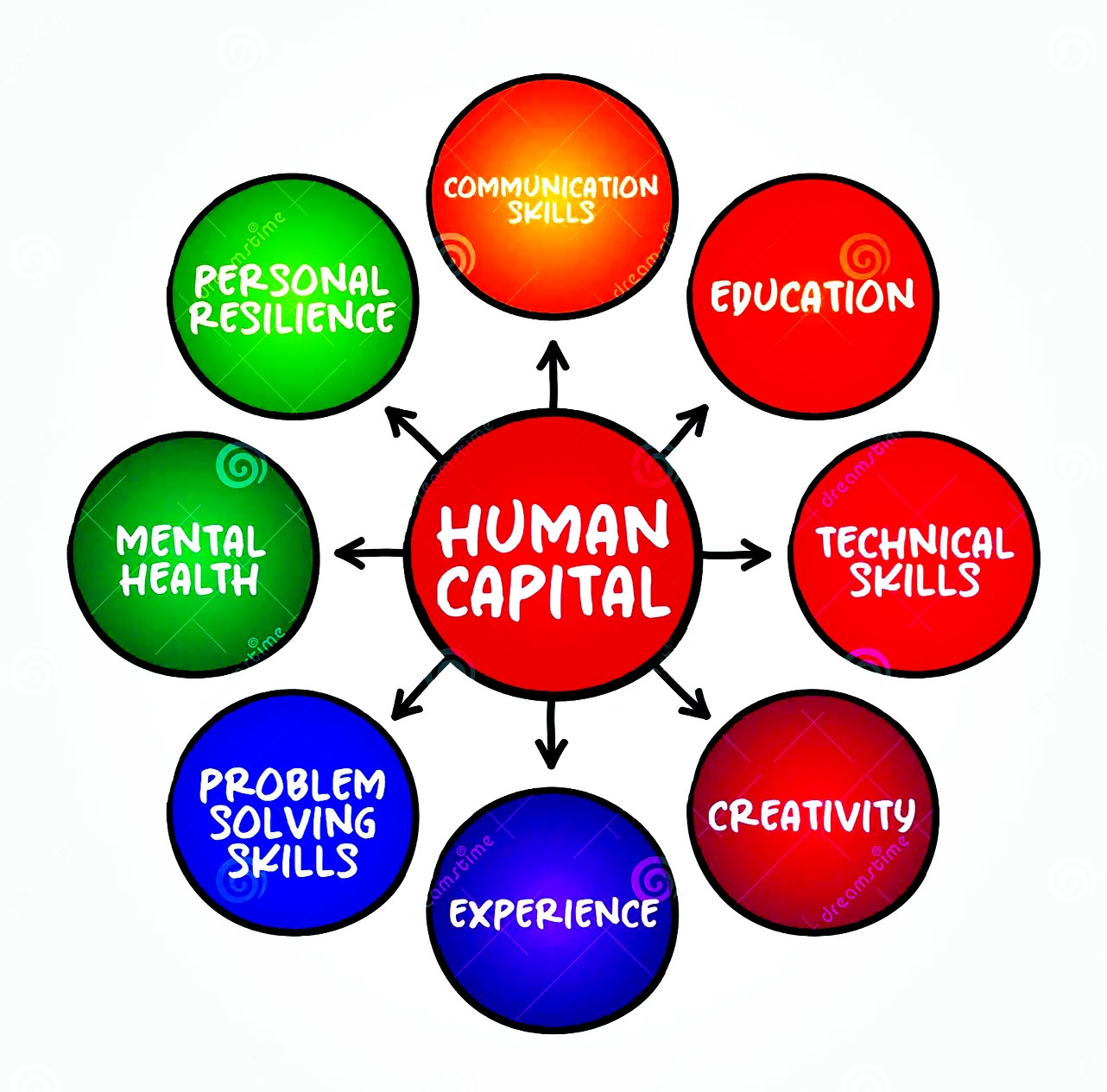
Human capital is a vital component of social development in India and Bangladesh. It is by judging the concept of human capital, there lays proper governance and democratic setup in both nations. Unless and until we are able to develop humanity then the concept of human capital will not bear any impact upon the citizens of both nations.
Now in order to delve upon both nations then let me begin with India. The current population of India is 145 crores. Out of the total population stated above, it is estimated approximately that 76% of the total population are literate, whereas balance 24% are illiterate. Among the 76% literate Indians, I feel in order to be optimistic that there are around 45% of the populaces, truly educated in the real sense of the term.
Though modern generations of the populaces in India and Bangladesh are becoming well educated. Their efforts are committed. But truly speaking all are not on the same plank. But why is it so? To answer to it I have to reply in the affirmative pattern. There are several talented souls hovering around the epicenter of both nations. But pity aspect to be noted is that proper talent in both India and Bangladesh. Such as, from Bangladesh, a former diplomat named Mohammad Shahidul Haque, a teacher of North South University, Dhaka. Later on Haque was dispatched to Delhi University, North Campus to head Bangabandhu Chair in the department of Political Science. Unfortunately Haque was suddenly taken off from DU (North), due to heinous political stalemate in Bangladesh immediately after the 12th parliamentary election. After Haque’s withdrawal there was no replacement to Haque. In the same manner Professor Imtiaz Ahmad, an international relations expert had to quit DU’s IR department. Now he has established new geo-political and integrated center named Center for Alternatives. Now Professor Ahmad is undergoing remarkable work in the subject of IR and International Politics.
If I don’t state the types of human capital. Then entire article might turn out to be a lackluster affair. Thus different types of human capital are stated as such, cultural capital, social capital, intellectual capital ,physical capital and finally educational capital which sounds of as paramount importance.
In the same manner in India there lies severe dearth of human capital along with Bangladesh. It is for the cognizance of my readers of both nations that what actually the term, ‘Human Capital’ is referred to in common man’s parlance.
In the same manner in India there lies severe dearth of human capital along with Bangladesh. It is for the cognizance of my readers of both nations that what actually the term, ‘Human Capital’ is referred to in common man’s parlance.
Thus the said term is referred to as such that includes knowledge, skills and other exciting skills which enable humanity of India and Bangladesh to sparkle in diverse fields of activities in order to reach to a skyrocketing level.
There are different components of human capital, such as education, on the job training, health and work experience in diverse professional and academic disciplines of repute.
Now touching upon the Indian and Bangladeshi aspects, I find there are severe dearth of human capital in both nations. In order to develop the standard of human capital, there are various processes involved in this regard. This is no doubt pertains to the two nations of South Asian Subcontinent.
Among all the processes involved, some of the common ones are stated as such, thorough investments in education, health, nutrition and diverse skills in professional, corporate and academic disciplines. Now coming to the analysis of the processes involved, are stated as such,Education- Initiatives should be undertaken by India and Bangladesh governments to provide quality education to respective citizens of the nation. Also on the job training is emphasized to the newcomers.
Health-Improving the healthcare facilities of citizens of both nations so that they are able to lead a sedate and hearty lifestyle.
Nutrition-Development of proper nutrition in human health so that they are able to lead sedate and sound life.
Nutrition-Development of proper nutrition in human health so that they are able to lead sedate and sound life.
Skills-Proper emphasize in pursuit of development of different types of skills. Also we must ensure division of labor in specialized activities.
From another angle there are some ways by which we are able to develop human capital. These are stated as such, hiring of diverse work force and implementation of accurate management techniques.
To throw light about development of human capital is no doubt a tough proposition. But still citizens are so determinant to introspect about it. Immediately after the birth of humanity in this earth. Parents with the motivation of grandparents go flat out to develop the new generations. Academic success no doubt is the prime requisite. Apart from the above we emphasize upon development of character building along with involvement into intensive reading.
About involvement into intensive reading it is detected from close shot that humanity of the present generation always think of positives of the society. Reading also helps us to electrify our thought processes in order to ignite our mind to glorious heights. Those who are intensive reader, they are richly benefited. Those who are their foot is not properly anchored.
As I write about development of human capital in both India and Bangladesh. It is pertinent on my part to throw light about the advantageous connected with my subject matter for both nations. Among all the advantages associated some of the common ones are stated as such, increase of productivity, developing innovative faculties of humanity, emphasize upon economic growth, emphasize upon retention of employee, ensuring job satisfaction of management and non-management staff, motivation to the staff to adapt the new technologies, adherence to corporate social responsibility and fostering thriving work culture.
That is why in corporate level or familial level it is now the highest moment of our life to emphasize the development of human capital. In common man’s viewpoints our task is to develop our juniors and along with societies. On academic field it is relevant to upgrade human talent. Humanity merely sitting idly will not suffice our goal. Rather with hard work and courage humanity will definitely rise up to the top of cliff.
There are many propounder existent around India and Bangladesh. Though the development has not taken place wholeheartedly in the context of the two nations, the pioneer till was Adam Smith, an eighteenth century Scottish economist interpreted the idea that a person’s skills and abilities could be considered as a form of capital which ultimately paves the way towards the accumulation of human capital. In realistic terms a person with sound capital is well accepted in all professional and academic disciplines. That is why humanity around us should develop the human capital in its fullest extent.
Apart from Adam Smith, the founder of Human Capital Theory, there is also another American economist named Greg Becker who was rated the prominent figure in formulating the Human Capital Theory. It was through his research work in economic sciences, Greg Becker, invented the idea of investing upon the development of human beings. In one of the popular management terminology Human Resources is deeply involved in the development of human capital in India and Bangladesh. Those involved into it they are emerged as victor those not are the worst loser. As per the concept of human capital theory is concerned, the entire kudos goes toGary Becker and Theodore Schultz, for development of this theory during the years 1950 and 1960.
It is from economic point of view, employees and capital equipment are treated as factors of production. It also became crystal clear to Becker that the investment in employees seems no different. Apart from the other founders of this theory, Irving Fisher also introduced human capital way back in the year 1897.
More behind to the above, Human Capital theory was founded jointly by Becker and Rosen alongside other authors. Also I find George Becker and Theodore Schultz jointly in the years 1950 and 1960 respectively.
From another perspectives I find that the concept of Human Capital has been originated with the views that leadership quality to run any business along with staff. It is the most vital investment in today’s world. Wanton poverty and Covid-19 during the year 2020 badly acted an obstacle towards the development and growth of human capital.
Summation of my above views, one point becomes crystal clear in my mind. That human capital should be given topmost priority in today’s competitive scenario. All countries of the globe are serious about the growth of humanity. But in South Asian nations like India and Bangladesh, I reiterate that we shouldn’t at all neglect human capital. From psychological point of view we may infer that the concept of human capital should once again be recharged so that citizens across India and Bangladesh should be trained indepthly so that their foot becomes firmly anchored in modern competitive scenario. Apart from the parents, grandparents, paternuncle plus other respected members of the family should contributed towards the splendid growth and grooming of modern generations. This cannot be denied from the back of our mind till our last breath in this earth.
Sujayendra Das is a columnist
based in Kolkata, India.
Sujayendra Das is a columnist
based in Kolkata, India.


