Published: 12:09 AM, 25 May 2026
Zaima Rahman Stands Out Symbolizing Refinement and Potentialities
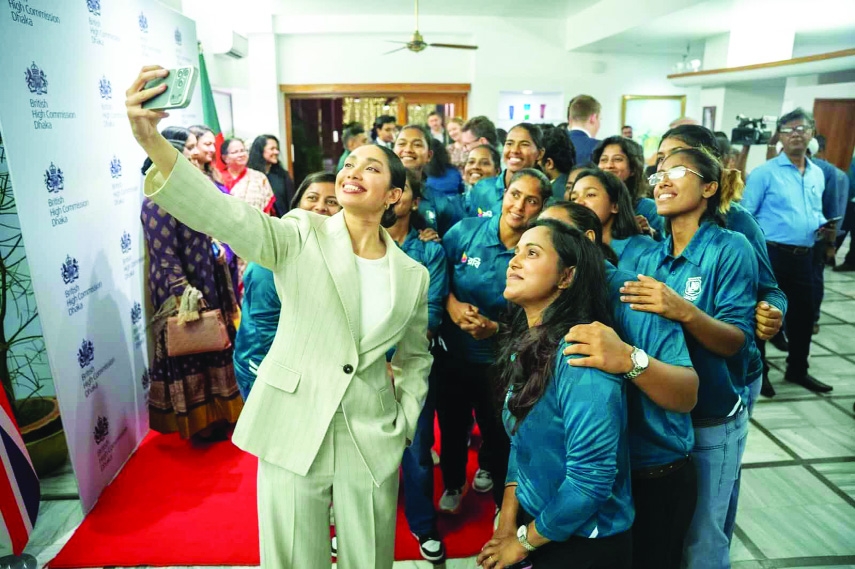
Bangladesh Prime Minister Tarique Rahman’s daughter Zaima Rahman takes a selfie with sports girls. Photo: Facebook
Kazi Ifat Zahir
Zaima Rahman has increasingly become a name associated with grace, intellect, modern leadership and the promise of a new generation in Bangladesh’s public life. As the capable daughter of Prime Minister Tarique Rahman, she naturally draws public attention, yet her growing reputation is not built merely on family identity. Rather, it comes from the quiet sophistication, educational excellence, and thoughtful public presence that have made many Bangladeshis view her as a symbol of refinement and future potentialities.
In a political culture often dominated by noise and confrontation, Zaima Rahman appears refreshingly composed. Her calm demeanor and dignified personality have distinguished her from the dramatic rhetoric that frequently characterizes South Asian politics. Supporters and admirers often describe her as elegant, articulate, and intellectually grounded — qualities that inspire confidence among young people who wish to see a more modern and enlightened form of leadership emerge in Bangladesh.
Education has played a central role in shaping Zaima Rahman’s public image. Her academic achievements are frequently praised by those who value merit, discipline, and international exposure. In a country where educated young women increasingly serve as role models for progress, Zaima represents ambition combined with sophistication. She embodies the aspirations of a generation that seeks both global excellence and strong national identity. Her educational background has helped cultivate the perception that she possesses not only intelligence but also the capacity to understand the complexities of governance, diplomacy and social development.
Zaima Rahman is making efforts to boost the spirit of players in the sports arena of Bangladesh. She wrote on Facebook a couple of days ago “The past few days have given me the privilege of celebrating our nation’s pride: our sporting heroes. From those representing Bangladesh on the global stage to local icons paving the way for the next generation, it was amazing to see our love of sport and the power it has to bring communities together first hand. It was a pleasure to meet the Bangladesh cricketing Tigresses as they prepare for the ICC Women’s T20 World Cup in England and Wales, the participants and winners of the One Run Hatirjheel Half Marathon, the national women’s kabaddi team, the senior national women’s hockey team, and the under-18 women’s and men’s hockey teams, both of whom will soon travel to Japan for the U18 Asia Cup. I am especially proud to celebrate the recent achievements of our women’s kabaddi team, who won bronze at the Asian Beach Games, and our senior women’s hockey team, who made history by qualifying for the Asian Games for the first time.
I am honoured to have met these teams and the incredible coaching staff who work tirelessly to ensure our athletes can perform at their best. Each and every one of them exemplifies what it means to be a sporting role model. Bangladesh must continue creating more opportunities for our athletes to compete with international teams, both at home and away, building friendship, experience, and excellence through every match.
What makes Zaima particularly admired is the balance she maintains between modernity and cultural identity. She reflects the image of a confident Bangladeshi woman who is globally aware while remaining deeply connected to her roots. This combination resonates strongly in contemporary Bangladesh, where many young citizens seek figures who can bridge tradition and progress. Her appearance, speech, and public conduct all contribute to an aura of polished confidence that many people find deeply appealing.
Another remarkable aspect of Zaima Rahman’s public image is her restraint. Unlike many public figures who constantly seek media attention, she has maintained a relatively measured and reserved profile. Ironically, this has only increased public curiosity and admiration. In an era of relentless self-promotion, restraint itself can become a powerful form of elegance. Many supporters interpret her composure as a sign of maturity and seriousness rather than mere celebrity culture.
Her admirers also see in her a reflection of resilience. Political families in Bangladesh often endure immense public pressure, scrutiny, and controversy. Growing up in such an environment requires emotional strength and adaptability. Zaima’s poised presence despite these pressures has led many to believe she possesses exceptional inner discipline. To supporters, she symbolizes stability and continuity during uncertain political times.
Among younger Bangladeshis, especially students and educated urban youth, Zaima Rahman has become something of an aspirational figure. Many appreciate her sophisticated personality and view her as representative of a future-oriented Bangladesh. In conversations on social media and political forums, admirers often express hope that educated and internationally aware individuals like her may eventually help shape a more progressive national culture. Whether or not she chooses a direct political role in the future, her symbolic influence already appears significant.
Zaima’s appeal also lies in the perception that she represents civility. Public discourse in Bangladesh can often become intensely polarized, but figures like her are admired because they appear capable of introducing a calmer and more thoughtful tone into national conversations. Admirers believe that her educational background and polished personality could contribute to a more intellectual and respectful political environment.
Furthermore, many supporters see Zaima Rahman as part of a broader transformation in the role of women in Bangladesh. The country has produced many accomplished women in politics, education, business, and culture, and Zaima fits naturally into this narrative of female empowerment. Her image projects confidence without arrogance and sophistication without detachment. For many young women, this combination is inspiring because it suggests that elegance and ambition can coexist harmoniously.
There is also a distinctly emotional dimension to the admiration she receives. To many supporters of the Bangladesh Nationalist Party and admirers of the Rahman family legacy, Zaima represents continuity, hope, and generational renewal. Political symbolism matters deeply in South Asian societies, and public figures are often viewed not only as individuals but as carriers of collective aspiration. In this sense, Zaima Rahman occupies a unique place in the minds of many Bangladeshis who seek both emotional connection and intellectual inspiration in public life.
Kazi Ifat Zahir is a freelancer
and a columnist.