
Published: 12:22 AM, 25 May 2026
Measles remains indomitable with 16 more deaths
Death toll since March 15 reaches 528
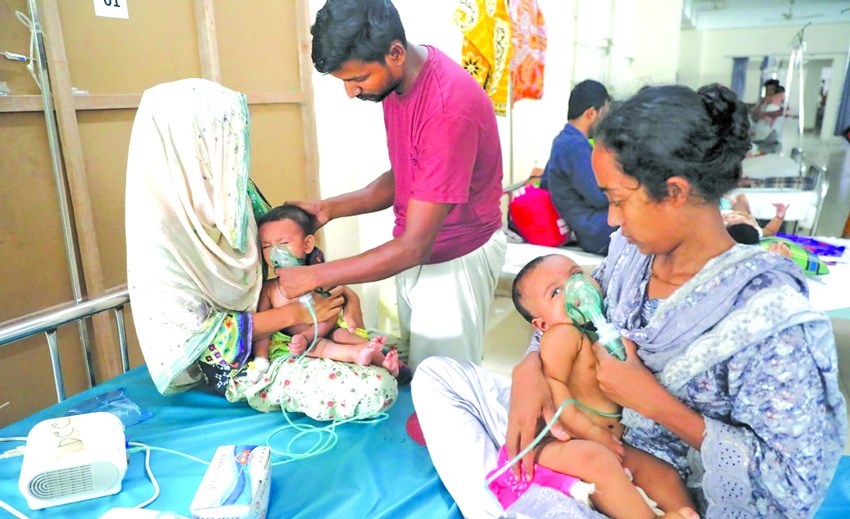
As many as 16 children died from measles-like symptoms in Bangladesh in the 24 hours till 8:00am on Sunday- 2nd highest death toll in a single day since the outbreak in March last.
With this, the country recorded the second highest single-day death toll for the second straight day. On Saturday, the country recorded 13 deaths from measles and similar symptoms.
With the latest fatalities, the death toll has reached 528 since March 15, 2026.
All 16 new deaths were classified as suspected, according to the Directorate General of Health Services (DGHS).
Among the suspected deaths, the highest 10 were reported in Dhaka division.
With this, the total number of suspected measles deaths has reached 442, while the confirmed deaths remained the same at 86.
According to DGHS data, a total of 1,306 suspected measles cases were recorded in the last 24 hours, taking the overall suspected cases to 63,813.
During the same period, 128 new confirmed measles cases were reported, bringing the total number of confirmed infections to 8,622.
Since March 15, a total of 50,558 suspected measles patients were hospitalised, of whom 46, 214 have recovered.
Earlier on May 4, the country recorded 17 deaths from measles and similar symptoms, the highest single-day toll since the outbreak of the highly contagious yet preventable disease.
Measles (rubeola) is a serious and extremely infectious viral illness. It spreads easily through the air when an infected person coughs, sneezes, or even breathes, and the virus can linger in the air or on surfaces for hours.
HOW IS MEASLES SPREAD?
The measles virus spreads easily via respiratory droplets and aerosols that are usually created through sneezing or coughing. It can remain infectious for up to 2 hours in the air or on surfaces through infected droplets.
People with measles can infect other people from up to 4 days before the rash appears (sometimes before they feel unwell) through to approximately 4 days after the rash has started to appear.
WHO CAN GET MEASLES, AND HOW COMMON IS IT?
Measles is very contagious and can be spread easily to people without immunity from vaccination or previous measles infection, even when most of the community is immune. To stop the disease from spreading during outbreaks, around 95% of people in a community need to be immune.
Measles was declared eliminated from Australia in 2014; however, measles outbreaks can occur when a person becomes infected overseas and travels to Australia. This can then lead to infections in non-travellers in Australia.
There was a large outbreak of measles in Australia in 2019, with 284 cases occurring in connection with large outbreaks in other countries where people frequently travel from Australia.
More recently, the number of measles cases in Australia has been increasing, including cases of local transmission (i.e. cases not associated with international travel).
The best way to protect against
measles is to get the measles, mumps, and rubella (MMR) vaccine. Children may get the measles, mumps, rubella, and varicella (MMRV) vaccine instead, which protects against chickenpox too.
Most people who are vaccinated with MMR or MMRV will be protected for life. Vaccines and high rates of vaccination have made these diseases much less common in the United States, compared to the period before these vaccines were available.
AFTER EXPOSURE TO MEASLES, MUMPS, OR RUBELLA:
If you don't have immunity[A] against these diseases and become exposed to them, talk with your doctor about getting MMR vaccine. It is not harmful to get MMR vaccine after being exposed to measles, mumps, or rubella.
If you get MMR vaccine within 72 hours of initially being exposed to measles, you may get some protection against recent exposure; or have milder illness. Getting vaccinated with MMR will also provide long-term protection against measles, mumps, and rubella. In other cases, people at high risk of severe disease may be given a medicine called immune globulin (IG) within 6 days of being exposed to measles. This may provide protection against the disease or make the illness milder.
WHY GETTING VACCINATED IS IMPORTANT:
The MMR vaccine protects your child from measles, mumps, and rubella, potentially serious diseases caused by viruses. The risks of getting one of these viruses is high for people who do not get the MMR vaccine, if they are exposed. The vaccine keeps your child from missing school or childcare; and you from missing work to care for your sick child. Vaccination also limits the size, duration, and spread of outbreaks.
For measles: MMR vaccine protects your child from getting an uncomfortable rash and high fever from measles, and potential complications.
For mumps: MMR vaccine protects your child from getting a fever and swollen glands under the ears or jaw from mumps.
For rubella: MMR vaccine prevents your child from getting a rash and fever from rubella. The vaccine also prevents your child from spreading rubella to a pregnant woman whose unborn baby could develop serious birth defects or die if the mother gets rubella.
>>Saiful Alam, AA


