BAU researchers develop AI model for flood forecasting /
Published: 06:53 PM, 28 April 2026 Last Update: 06:56 PM, 28 April 2026
BAU researchers develop AI model for flood forecasting /
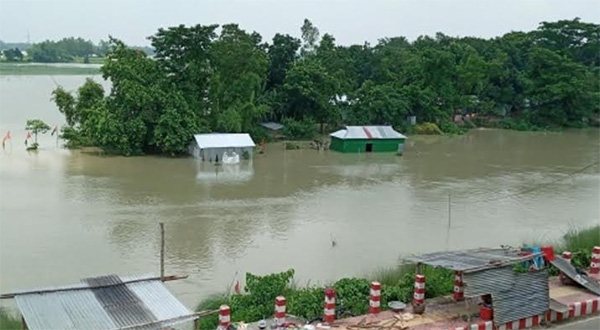
Rayhan Abid, BAU Correspondent: Researchers at Bangladesh Agricultural University (BAU) have developed a sophisticated AI model that marks a major advancement in flood management for Bangladesh. By employing machine learning and deep learning, this technology provides precise early warnings and can predict river water levels even in areas where data is limited.
The research was led by Dr. Md. Touhidul Islam, Associate Professor of the Department of Irrigation and Water Management at BAU. The team included Professor Dr. AKM Adham from the same department, along with a group of dedicated undergraduate and postgraduate students.
The project received financial backing from the Ministry of Science and Technology (MoST) and the University Grants Commission (UGC) of Bangladesh. Technical and administrative support was facilitated by the Bangladesh Agricultural University Research System (BAURES).
Initiated in mid-2025, the study analyzed 26 years of meteorological and hydrological data from 1999 to 2024. The researchers tested various AI models using data from four critical stations along the Old Brahmaputra River, specifically Islampur, Sarishabari, Dewanganj, and Mymensingh.
The primary objective was to predict fluctuations in river water levels by analyzing variables such as rainfall, temperature, and water flow rates. The findings of this research were published in 2026 in a prestigious international journal categorized under Q1-Q2 rankings.
The study compared several AI techniques, including Random Forest Model (RFM), Support Vector Machine (SVM), and Long Short-Term Memory (LSTM) networks. The results were remarkable. When full historical data was utilized, the Random Forest model achieved an accuracy rate of 99.16 percent. In regions where data is scarce, the Deep Learning LSTM model provided an 81.45 percent accuracy rate using only rainfall and temperature data. This level of precision in data-limited environments marks a major milestone for areas that lack sophisticated monitoring infrastructure.
According to the lead researchers, the practical application of this technology will directly benefit the country's agricultural sector. Dr. Md. Touhidul Islam stated that with accurate early warnings, farmers can harvest their ripened crops, such as paddy, before a flood hits. It will also allow them to move livestock to safer ground and optimize irrigation planning, significantly reducing potential financial losses.
The innovation is currently structured as an operational framework that can be integrated into the national river network's forecasting centers. As a software-based digital solution, it requires no additional costs for farmers to access.
The researchers emphasized that with government patronage and technical scaling, this AI system could be transformed into a mobile application or an SMS-based alert system. This would ensure that life-saving flood alerts reach the doorsteps of rural farmers across the country, creating a robust, technology-driven disaster resilience network