Published: 09:34 AM, 04 May 2026
Half of the world's potentialities comprises women: UN Women Rights Head
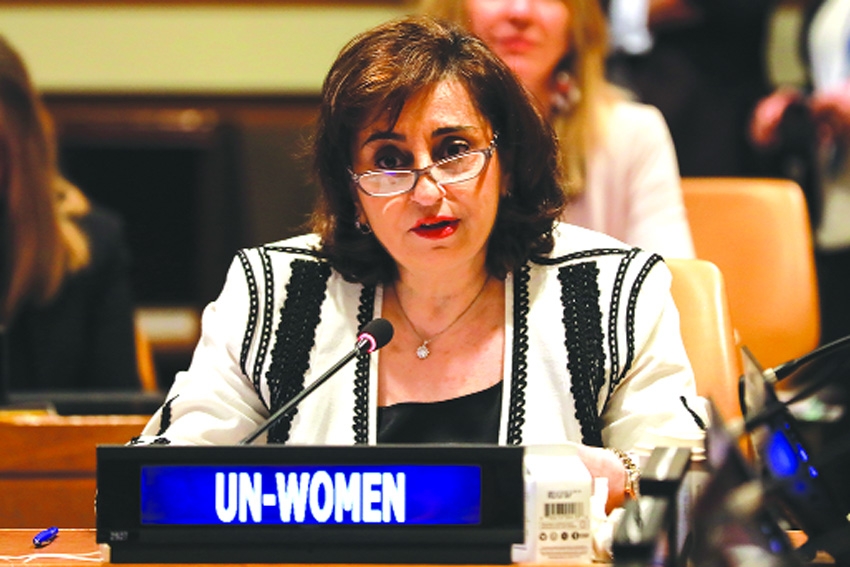
The United Nations has organized four world conferences on women. These took place in Mexico City in 1975, Copenhagen in 1980, Nairobi in 1985 and Beijing in 1995. The last was followed by a series of five-year reviews held in Beijing in March 2025.
The 1995 Fourth World Conference on Women in Beijing marked a significant turning point for the global agenda for gender equality. The Beijing Declaration and the Platform for Action, adopted unanimously by 189 countries, is an agenda for women's empowerment and considered the key global policy document on gender equality.
Women and girls represent half of the world's population and, therefore, also half of its potential. Human rights officials have said that gender equality, besides being a fundamental human right, is essential to achieve peaceful societies, with full human potential and sustainable development. Moreover, it has been shown that empowering women spurs productivity and economic growth.
Unfortunately, there is still a long way to go to achieve full equality of rights and opportunities between men and women, warns UN Women Rights Office.
Therefore, it is of paramount importance to end the multiple forms of gender violence and secure equal access to quality education and health, economic resources and participation in political life for both women and girls and men and boys.
It is also essential to achieve equal opportunities in access to employment and to positions of leadership and decision-making at all levels.
The United Nations defines violence against women as "any act of gender-based violence that results in, or is likely to result in, physical, sexual, or mental harm or suffering to women, including threats of such acts, coercion or arbitrary deprivation of liberty, whether occurring in public or in private life."
Some latest facts and figures from the United Nations show that women in various countries till today continue to face violence despite the fact that statutory laws and legal defence for women strongly exist.
Women and girls represent half of the world's population and, therefore, also half of its potential. Human rights officials have said that gender equality, besides being a fundamental human right, is essential to achieve peaceful societies, with full human potential and sustainable development.