Published: 10:10 AM, 10 May 2026
‘Flawed policies under Awami rule crippled the base of economy’
Over the past decade, the country’s macroeconomic foundations and growth became increasingly fragile due to the Awami government’s flawed policies, irregularities, corruption, and weak project management. Massive irregularities plagued the banking and energy sectors, while the lack of good governance caused by political interference prevented the country from achieving sustainable economic growth.
During that period, private investment, export trade, small businesses, and other drivers of economic growth slowed significantly. The current government inherited this fragile economy as it began its journey. Almost every project undertaken during the Awami regime was heavily overvalued, with “mega corruption” taking place behind the façade of mega projects.
Moreover, corruption in smaller projects often surpassed even the scale of corruption in mega projects. However, public discussion on irregularities in smaller projects remained limited because the focus largely stayed on mega-project corruption. If Family Cards and Farmer Cards can be distributed properly to the right beneficiaries, free from political considerations, irregularities, and corruption, they will undoubtedly improve the living standards of marginalized communities without increasing the burden of debt.
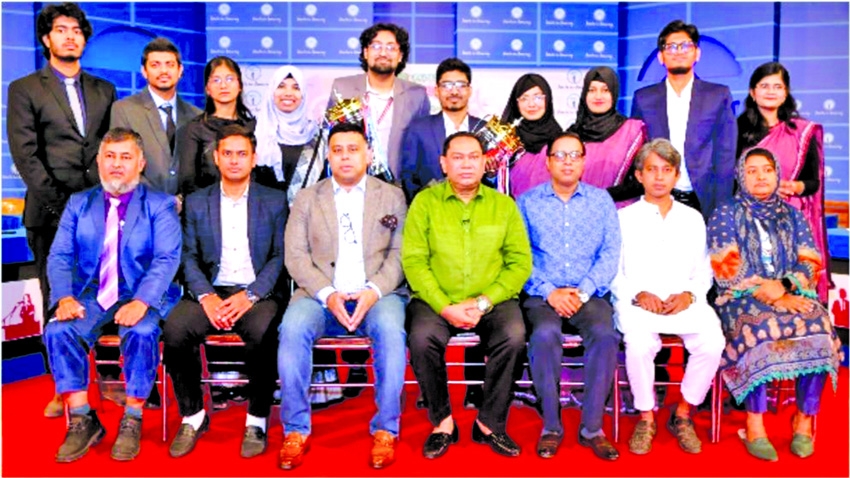
These remarks were made by Dr. M. Masrur Reaz, Chairman and CEO of Policy Exchange Bangladesh, while addressing a pre-budget shadow parliament debate on the challenges of formulating the upcoming national budget at the FDC on Friday (May 8). The session was chaired by Hasan Ahmed Chowdhury Kiron, Chairman of Debate for Democracy, the organizer of the event.
In his presidential speech, Hasan Ahmed Chowdhury Kiron stated that the country’s economy is now “in the ICU,” and overcoming the current crisis requires a people-friendly, business-friendly, sustainable, and implementable budget. He emphasized that a national budget must reflect the expectations of ordinary citizens and include a clear development vision and policy direction. According to him, corruption remains one of the biggest obstacles to effective budget implementation in Bangladesh.
He further noted that without strong political commitment, successful implementation of the budget is impossible. The government must take initiatives to restore economic momentum by ensuring honesty, dedication, justice, accountability, and good governance. He also suggested reopening the frozen bank accounts of businesses that were indiscriminately targeted and taking immediate steps to restart closed factories and industries. State-owned enterprises suffering losses for years, he added, should be transferred to the private sector.
Kiron also stressed that the upcoming budget should allocate adequate resources for social safety-net programs to address the current financial slowdown.
However, he said, such support must be targeted and strategic. Continuing subsidies indefinitely in certain sectors may discourage growth in others. Priority should instead be given to subsidies supporting agriculture, irrigation, fertilizer, SMEs, and the protection of marginalized communities.
In the pre-budget shadow parliament debate titled “Addressing the Crisis Created by the Middle East Conflict Is the Main Challenge in Formulating the Upcoming Budget,” debaters from Sher-e-Bangla Agricultural University defeated contestants from Jagannath University to emerge victorious.
The judging panel included journalists Ziaul Haque Sabuj, Umman Nahar Azmi, Masum Mia, Atiqur Rahman, and Mohammad Abdul Wadud. At the end of the competition, trophies, crests, and certificates were awarded to the participating teams. The shadow parliament event was organized by Debate for Democracy.