Published: 12:07 AM, 18 May 2026
SACIN begins journey to advance circular economy across Asia
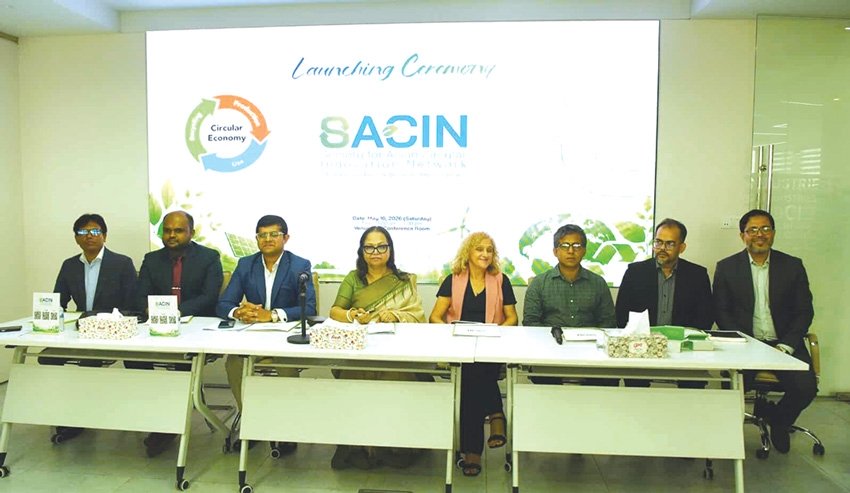
The Society for Asian Circular Innovation Network (SACIN), a research think tank dedicated to advancing circular economy solutions across Asia, officially launched its journey through a programme in Dhaka on May 16.
Speaking at the event held at the BCI Conference Room on Saturday, SACIN Founder President Priti Chakraborty said the organisation aims to promote sustainable development through research, innovation, policy engagement, and regional collaboration across Asia, according to a press release.
"Today we are not just introducing an organisation; we are beginning a new journey, a new way of thinking, and a new responsibility," she said.
SACIN's slogan - "Think Circular. Innovate Regionally. Impact Globally." - reflects its vision of building an Asia that leads the world in circular economy and sustainable development. The organisation initially starts with a focus on textiles and apparel, Bangladesh's largest export sector, but will now work across a broader range of industries including agriculture, manufacturing, construction and real estate, healthcare, plastics, power and energy, financial services, water and sanitation, and shipbuilding.
Nuria Lopez, Chairperson ofEuroCham Bangladesh, AshrafulHaqChowdhury, President ofSaudi Arabia-Bangladesh Chamber of Commerce and Industry (SABCCI), Prof Dr MonirUddin, former Chairman of the Department of Chemistry, University of Chittagong, ZM GolamNabi, President of Organisation for Reduction of Carbon Footprint in Bangladesh, and MollahAmzadHossain, Editor of Energy & Power, graced the event, among others, as guests of honour.
SACIN Executive Committee MembrerMostofa Azad ChowdhuryBabu, Vice-president ShiaburRahmanShihab, Secretary General Shafayat Hosen, Advisor AKM JahidulAlam, Joint Secretary Sheikh MdRezviNewaz, Treasurer architectMdNazmuchhChhakib, and Executive Committee Member MahfujurRahmanalso spoke.
Nuria Lopez, in her speech, said Bangladesh can no longer view circular economy and sustainability merely as compliance requirements imposed by global markets, as climate change and outdated production models are already affecting the country's future and competitiveness.