
Published: 12:14 AM, 20 May 2026
Sheikh Hasina plans Bangladesh return very soon: Report
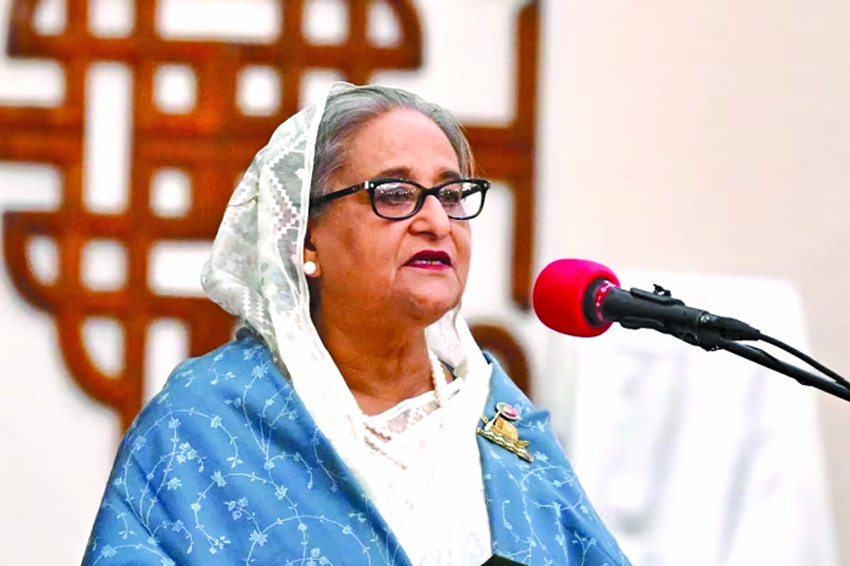
Former Prime Minister Sheikh Hasina has said she will return to the country "very soon", linking her comeback to what she described as the restoration of a democratic environment and political rights, according to an email interview published by the Hindustan Times.
In the interview, Hasina warned that Bangladesh could drift back towards what she called the "dark days" of 2001 to 2006, when the Bangladesh Nationalist Party (BNP) was in power, saying rising militant and extremist forces posed a renewed risk to stability.
Hasina, who has been living in India since her Awami League government collapsed following student-led protests in 2024, also stressed that her absence from the country did not amount to political silence, said the Indian English-language daily.
"My absence does not mean my silence. Every moment, I am fighting for the country and we are actively working at the diplomatic level, within international legal frameworks and through global media," she was quoted as saying.
She added that her return was not tied to any fixed timeline, but to broader political conditions.
"The matter of return does not depend on a specific date or time. We are continuing to work toward ensuring a democratic environment in Bangladesh, freedom of expression, political rights and the restoration of the rule of law," she said in the interview.
Hasina also said such conditions were not only necessary for her return, but also for what she described as safeguarding the country's sovereignty and public welfare.
"By uniting the people of the country, we will soon achieve that goal," she said.
Reiterating her confidence about coming back, Hasina said, "I have survived 19 assassination attempts but nothing has been able to stop me. Since the Almighty has kept me alive, I will return to the soil of Bangladesh very soon."
During the interim administration, Hasina was sentenced to death by the International Crimes Tribunal (ICT) on charges of crimes against humanity in connection with the violent suppression of the July Uprising.
Asked whether her return was feasible amid the ban on the Awami League and multiple legal cases against her, Hasina dismissed the restrictions as "politically motivated and temporary".
"The Awami League is a party of the masses, it was not born through the power of guns or the blessings of authority. No ban written on paper can ever suppress this party," she was quoted as saying.
She added that the party had repeatedly survived political setbacks and would do so again.
"If bans could suppress the Awami League, then Bangladesh itself would never have been born," she said in the interview.
Hasina also argued that restrictions on the party reflected fear among political opponents rather than legal permanence, claiming the party retained mass support despite "attacks, cases, imprisonment and persecution".
Hasina fled to India following the fall of her government in the student-led mass uprising in August 2024.
Addressing internal discussions within the party about leadership restructuring, she reportedly said organisational change was normal but rejected the idea of replacing ideological foundations.
"The Awami League is a democratic party. Ideological activists are the lifeblood of this party, and they elect the leadership," she said, adding that allegations against individuals did not represent the organisation as a whole.
Hasina concluded that her return, and the party's future, were only "a matter of time".
>>Agency


