
Published: 10:59 AM, 06 September 2026
Students Demonstrate at U.S. Universities Against Iran War
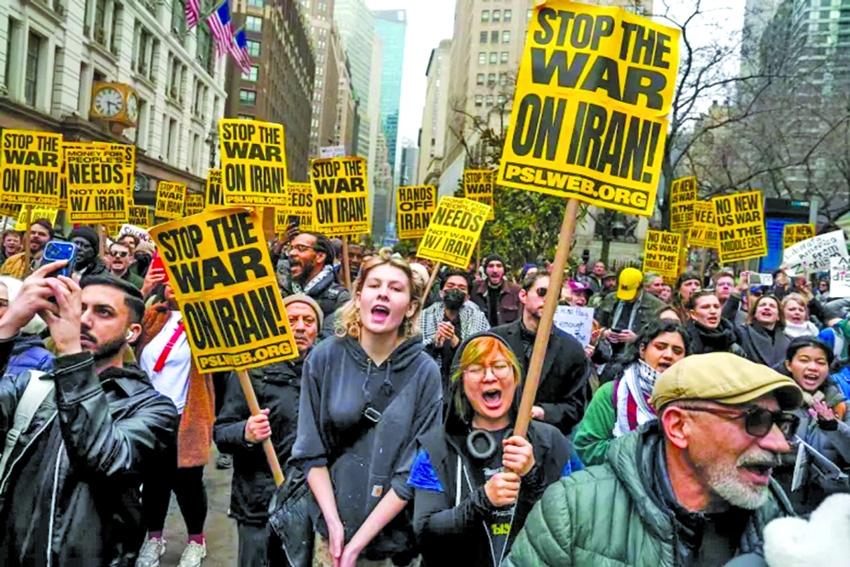
For many student protesters in the United States, the Iran War issue is not simply about supporting one government or opposing another. They argue that ordinary people on both sides are paying the price for decisions made by political and military leaders. Sky News
Student activism has once again become a visible force on American university campuses as young people raise their voices against the ongoing war between the United States and Iran. Demonstrations, teach-ins, rallies, and campus discussions have reflected growing concern among students about civilian casualties, the humanitarian consequences of war, military spending, and the possibility of a wider regional conflict.
The protests come at a time of heightened tensions between Washington and Tehran. Recent U.S. airstrikes and Iranian retaliation have intensified public debate over the military campaign. A recent Reuters/Ipsos poll found that only 25 percent of Americans surveyed believed the war was worthwhile, highlighting the deep divisions surrounding the conflict.
For many student protesters, the issue is not simply about supporting one government or opposing another. They argue that ordinary people on both sides are paying the price for decisions made by political and military leaders. Students have called for diplomacy, negotiations, humanitarian protection, and an end to military escalation.
University campuses have historically played an important role in American political movements. From the civil rights movement and opposition to the Vietnam War to more recent demonstrations over racial justice and international conflicts, students have frequently used their campuses as places to debate national and global issues. The current protests against the Iran war are part of that long tradition of student political engagement.
Students involved in the demonstrations say universities should provide spaces where controversial political issues can be discussed openly. They argue that academic institutions have a responsibility to encourage critical thinking and peaceful debate rather than discourage students from expressing political opinions.
However, campus demonstrations have also created difficult challenges for university authorities. Administrators must balance students' right to peaceful protest with the need to maintain safety, prevent harassment, and ensure that classes and other academic activities can continue. The issue has become particularly sensitive as universities across the United States face increasing political and governmental scrutiny over campus protests and free expression.
The debate over student activism has also raised questions about freedom of speech. Recent legal developments have reinforced the importance of protecting political expression on university campuses. In one recent case, a federal judge ruled that efforts to deport noncitizens for expressing criticism of Israel and support for Palestinians violated constitutional protections for free speech. The ruling has added to broader discussions about the rights of international students and scholars to participate in political debate.
For international students, the war can carry an especially personal meaning. Students from Iran, the Middle East, and other affected regions may have family members and friends directly exposed to the consequences of conflict. The disruption caused by sanctions and military tensions can also affect education. Recent U.S. sanctions have contributed to the cancellation of English-language and graduate examinations used by Iranian students seeking to study abroad, according to reporting by The New York Times.
American students are therefore debating not only the immediate consequences of military action but also the long-term impact of the conflict on education, international relations, migration, and global security.
Supporters of the demonstrations believe student activism can influence public opinion and encourage political leaders to reconsider military policies. Critics, however, argue that university campuses should remain focused primarily on education and that some demonstrations can become disruptive or create tensions among students with different political and cultural backgrounds.
Both concerns deserve consideration. Peaceful protest is an important part of democratic society, but universities also have a responsibility to protect every student's right to learn and participate without intimidation. Constructive campus activism should therefore emphasize peaceful expression, factual discussion, and respect for opposing viewpoints.
The protests also demonstrate that today's university students are deeply connected to international affairs. In an age of social media and instant communication, a conflict thousands of miles away can quickly become a campus issue. Students follow developments in real time, communicate with people in affected countries, and organize demonstrations through digital networks.
The challenge for universities is to turn this political energy into meaningful education. Rather than simply treating demonstrations as a security problem, institutions can organize public forums, debates, lectures, and discussions involving scholars and students with different perspectives. Such programs can help young people understand the historical, political, and humanitarian dimensions of the conflict.
Ultimately, the student demonstrations against the Iran war reflect a broader desire among many young Americans to have a voice in decisions that may shape their generation's future. Whether one agrees with the protesters or not, their activism demonstrates that university students remain willing to question government policy and demand accountability.
As the conflict continues, the campuses of America's universities are likely to remain important centers of debate. The voices emerging from those campuses may not provide easy answers to a complicated war, but they raise fundamental questions about peace, human rights, democracy, and the responsibilities of governments.
For many students, the message is simple: military conflict should not become the only language of international relations. Diplomacy, dialogue, and the protection of civilian life must remain possible alternatives. In that sense, their demonstrations represent not only opposition to a particular war but also a wider demand for a more peaceful future.


