
Published: 11:40 AM, 10 September 2026
NY Mayor Mamdani Calls for Fraternity Among All Communities
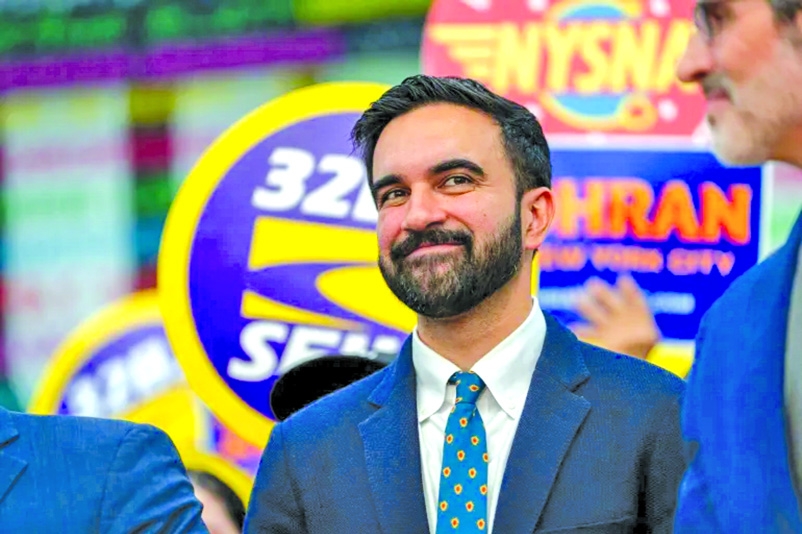
New York Mayor Zohran Mamdani has called for greater fraternity, understanding, and cooperation among the city’s diverse communities, emphasizing that unity is essential to preserving New York’s strength and character.
Speaking against a backdrop of political and social divisions, Mamdani stressed the importance of building bridges among people from different religious, ethnic, cultural, and economic backgrounds. New York, one of the world’s most diverse cities, is home to communities representing virtually every region of the globe. The mayor’s message centered on the idea that diversity should be treated as a source of strength rather than division.
Mamdani urged New Yorkers to reject hatred, discrimination, and prejudice and to recognize the shared concerns that affect residents regardless of their background. Rising living costs, housing difficulties, access to public services, employment, and neighborhood safety are issues that cross community boundaries, he noted.
His appeal for fraternity also comes at a time when political disagreements and tensions over international conflicts can increasingly influence relations within local communities. Events taking place overseas often have emotional and political consequences in New York, where different communities maintain strong cultural and family connections with countries around the world.
The mayor called for dialogue rather than hostility, suggesting that disagreements should be addressed through democratic discussion and mutual respect. Community leaders, religious organizations, schools, civic groups, and local institutions all have a role to play in creating spaces where residents can communicate and understand one another.
Mamdani’s emphasis on inclusion reflects one of the central challenges facing New York: maintaining social cohesion in a city marked by extraordinary diversity. While differences in religion, culture, political beliefs, and personal experiences are inevitable, peaceful coexistence depends on a willingness to respect those differences.
Observers say such appeals can be particularly important during periods of heightened tension, when misinformation and inflammatory rhetoric can quickly spread through social media. Public leaders can help counter such trends by encouraging citizens to rely on dialogue, verified information, and community engagement.
For many New Yorkers, the call for fraternity is ultimately a call for shared citizenship. Regardless of where people were born or which faith they follow, they share the same streets, public spaces, schools, workplaces.
and city institutions.
Mamdani’s message therefore extends beyond politics. It is a reminder that New York’s future depends on its ability to remain a city where different communities can live together with dignity, equality, and mutual respect. In a metropolis defined by diversity, solidarity may be one of its most valuable strengths.
What makes Mamdani particularly admirable is his ability to connect politics with the everyday concerns of working people. Rather than presenting leadership as something distant from ordinary life, he has emphasized issues such as affordable housing, living costs, public services, workers’ rights, and economic opportunity. His focus on these concerns reflects an understanding that government policies ultimately have their greatest impact on families and communities.
Mamdani’s political journey is also noteworthy because of the diversity of New York itself. As a politician with an immigrant background, he symbolizes the city’s long tradition of welcoming people from different parts of the world. His rise demonstrates that political participation can provide opportunities for individuals from varied cultural and social backgrounds to contribute to public life.
Another quality that has earned admiration is his willingness to speak openly about issues that can be politically difficult. Whether discussing inequality, housing, discrimination, or the cost of living, Mamdani has generally sought to put these subjects at the center of public debate. Supporters view this directness as evidence of political courage.
His emphasis on solidarity among New York’s many communities is equally significant. The city is home to people of different religions, ethnicities, languages, and political beliefs. In such a diverse environment, responsible leadership requires an ability to recognize differences while promoting a common civic identity. Mamdani’s calls for fraternity and cooperation reflect this ideal.
For young people in particular, his political career can serve as an encouraging example of civic engagement. His rise suggests that younger generations do not have to remain passive observers of political life. They can organize, participate, express their views, and seek public office in pursuit of the changes they believe are necessary.
Admiration, however, should not mean unquestioning support. Like any elected leader, Mamdani should be judged by the results of his policies, his ability to govern effectively, and his willingness to remain accountable to the public.
Nevertheless, his emphasis on social justice, inclusion, and the concerns of ordinary people has made him a distinctive figure in New York politics. For those who admire his vision, Mamdani represents more than a mayor: he represents the possibility of a more inclusive, compassionate, and people-centered style of leadership.


