
Published: 11:35 PM, 06 November 2026
European Commission Launches €1.8 Billion for Strategic Technologies
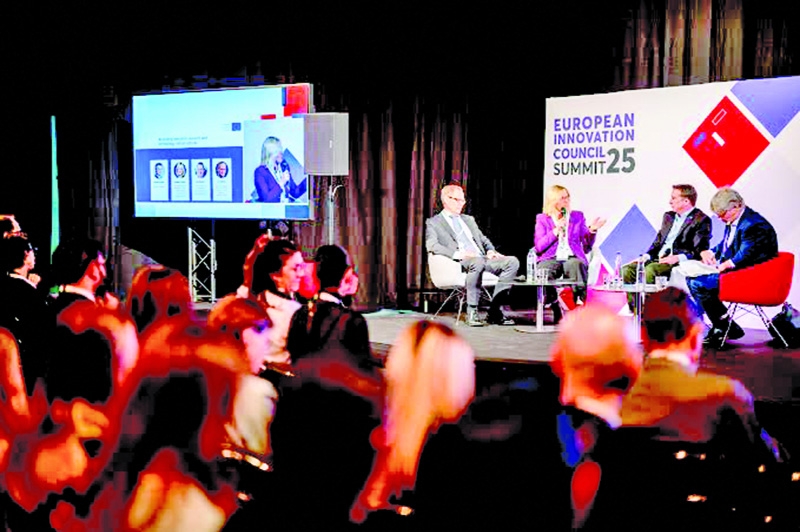
The European Commission has announced a major €1.8 billion funding package for 2027 through the European Innovation Council (EIC), aiming to strengthen scientific research, accelerate technological development and support Europe's most promising startups and innovative businesses.
The 2027 EIC Work Programme was adopted on November 5, 2026, marking an important step in the European Union's efforts to strengthen its global competitiveness and technological independence. The funding will support researchers, entrepreneurs and technology companies seeking to transform groundbreaking scientific discoveries into commercially successful products and services.
The initiative represents the final EIC funding package under the Horizon Europe 2021-2027 research and innovation framework. It is designed to help Europe overcome challenges associated with technological competition, industrial development and dependence on foreign suppliers for critical technologies.
European officials believe that investment in research and innovation is essential to maintaining the continent's economic strength. The program will focus particularly on deep technology, commonly known as deep tech, which includes advanced scientific and engineering developments with the potential to transform industries.
The funding will support innovators throughout different stages of development, from early scientific research and experimental projects to commercialization and international expansion. Particular attention will be given to companies working in strategic sectors where Europe seeks to strengthen its technological capabilities.
The initiative will also continue supporting the Scaleup Europe Fund and the EIC Strategic Technologies for Europe Platform (STEP) Scale Up scheme. These programs are intended to help promising European companies obtain substantial investment and compete with major technology businesses in the United States and Asia.
A significant component of the funding strategy involves strategic and defense-related technologies. The European Union has increasingly emphasized the importance of developing its own technological capabilities in response to geopolitical tensions, changing international security conditions and growing competition among major economic powers.
The 2027 program includes completing funding commitments of €1 billion for the Scaleup Europe Fund, €200 million for defense investments and €25 million for the Advanced Innovation Challenges pilot. These initiatives were introduced in 2026 and will continue to support Europe's technological ambitions.
Another important objective is making funding applications simpler and faster. European startups and research teams have frequently faced administrative difficulties when seeking public financial support. The Commission intends to reduce unnecessary complexity and improve access to investment opportunities.
The EIC Pathfinder program will also receive improvements to manage the growing number of applications for breakthrough research. Meanwhile, the EIC Transition scheme will strengthen its support for individual research teams and companies rather than relying primarily on larger consortia.
Women entrepreneurs will receive additional attention under the redesigned Women TechEU initiative. Grants for women-led startups will double to €150,000 per company. A new European Prize for Women Innovators in Quantum will also recognize outstanding contributions by female entrepreneurs in the emerging quantum technology sector.
The European Commission is also seeking to help innovative companies secure their first customers. New measures will connect EIC-backed businesses with public institutions and private-sector purchasers. Such opportunities could allow startups to test their technologies, demonstrate their commercial value and establish long-term business relationships.
The EIC has already established itself as an important source of financial assistance for European innovators. Since its launch, it has supported more than 800 companies and nearly 700 research projects. Its investment arm, the EIC Fund, has invested close to €2 billion in more than 375 deep-tech startups while attracting approximately 3.5 times that amount in additional investment.
European Commissioner for Startups, Research and Innovation Ekaterina Zaharieva has emphasized the importance of mobilizing investment, reducing administrative barriers and helping promising businesses expand.
The funding announcement comes as Europe faces increasing technological competition from the United States and China. Artificial intelligence, quantum computing, advanced materials, biotechnology, robotics and semiconductor development are becoming increasingly important to economic security and industrial competitiveness.
Experts believe that Europe's challenge is not simply producing scientific discoveries but ensuring that successful research can be converted into profitable businesses and widely adopted technologies. Many European startups have struggled to obtain sufficient investment when moving from research laboratories to large-scale commercial operations.
The new funding package is expected to help address this financing gap while encouraging greater cooperation between universities, research institutions, entrepreneurs and established industries.
However, the success of the initiative will depend on effective implementation, transparent funding procedures and the ability to deliver measurable results. Financial commitments alone cannot guarantee technological leadership without skilled workers, strong research institutions and a supportive business environment.
Ultimately, the European Innovation Council's €1.8 billion investment represents a significant effort to strengthen Europe's scientific foundations and technological independence. By supporting ambitious researchers and innovative companies, the European Union hopes to turn scientific excellence into economic growth, industrial resilience and international competitiveness.


