
Published: 12:20 AM, 27 November 2026
At Least 31 People Killed as Fuel Tanker Catches Fire in Cairo
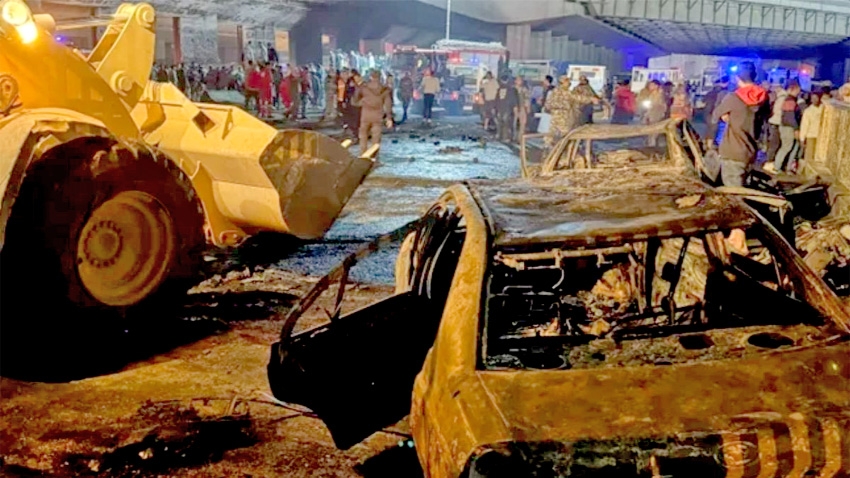
At least 31 people have been killed and 21 others injured after a fuel tanker overturned and burst into flames on a major highway surrounding Egypt's capital, Cairo, in one of the country's deadliest recent road disasters. The massive fire engulfed numerous nearby vehicles, leaving a trail of destruction along the busy Ring Road and triggering an extensive emergency response.
The accident occurred on Wednesday, November 25, 2026, in the Warraq district of Giza, near the Imbaba area of Greater Cairo. According to Egyptian authorities, a vehicle transporting petroleum products overturned above Tunnel 10 on the Ring Road before catching fire. The flames quickly spread to passing cars and motorcycles, creating a massive blaze that trapped several motorists and passengers.
Eyewitnesses described scenes of panic as enormous flames and thick clouds of black smoke rose above the highway. Drivers attempted to escape from their vehicles while others struggled to help passengers trapped inside burning cars. Several vehicles were completely destroyed, while others were left severely damaged by the intense heat.
The Egyptian Ministry of Health and Population confirmed that at least 31 people had died and 21 others had sustained injuries. Officials emphasized that the figures were preliminary and that the full extent of the disaster was still being assessed. The Public Prosecution reported that approximately 27 vehicles, including cars and motorcycles, had been burned in the incident.
Emergency services responded quickly after receiving reports of the accident. The Health Ministry dispatched 39 ambulances to the scene to transport injured people to nearby medical facilities. Several hospitals in the surrounding areas, including Imbaba General Hospital and Warraq Central Hospital, received casualties. Medical authorities placed nearby hospitals on heightened alert to ensure that victims received immediate treatment.
Rescue workers faced considerable difficulties because of the intensity of the flames and the extensive damage to vehicles. Firefighters worked to extinguish the blaze and prevent it from spreading further.
Emergency personnel also searched the wreckage for survivors and recovered the bodies of those who had lost their lives.
The identification of victims has become another major challenge. Egyptian prosecutors ordered DNA samples to be collected from unidentified bodies to establish their identities and notify relatives. Investigators are also interviewing survivors and examining the accident site to determine the circumstances surrounding the tragedy.
Egyptian President Abdel-Fattah el-Sissi expressed his condolences to the families of those killed and conveyed sympathy to the injured. The government also directed relevant authorities to restore normal traffic conditions on the highway as quickly as possible. Public prosecutors have launched a formal investigation into the incident, although the precise cause of the tanker overturning has not yet been established.
The tragedy has once again raised serious questions about road safety and the transportation of hazardous and highly flammable materials in Egypt. The country's transportation system has experienced numerous fatal accidents over the years, with speeding, poor road conditions, vehicle maintenance problems, and inadequate enforcement of traffic regulations frequently identified as contributing factors.
Fuel tankers present additional risks because petroleum products can ignite rapidly following collisions, leaks, or mechanical failures. When such accidents occur on crowded highways, nearby vehicles and passengers can become vulnerable within moments. Experts emphasize the importance of regular vehicle inspections, strict safety standards, properly trained drivers, and effective emergency response systems.
The incident also highlights the importance of strengthening disaster preparedness in densely populated urban areas. Cairo is one of Africa's largest metropolitan centers, with millions of residents depending on its extensive road network for daily transportation. Heavy traffic, crowded neighborhoods, and the movement of commercial vehicles create significant challenges for transportation authorities.
For Bangladesh, the disaster offers an important reminder of the need to improve road safety and regulate the transportation of petroleum products. Bangladesh also faces serious transportation challenges, including tanker accidents, highway collisions, inadequate vehicle inspections, and weaknesses in emergency response arrangements. Authorities should strengthen monitoring systems, enforce traffic regulations, ensure proper training for commercial drivers, and improve coordination among firefighters, police, and medical services.
Bangladesh Petroleum Corporation and other relevant agencies should also ensure that fuel transportation vehicles meet appropriate technical and safety requirements. Regular inspections, emergency response training, and strict compliance with safety regulations can help reduce the risk of similar disasters.
Meanwhile, international attention is focused on the Egyptian investigation and the support being provided to victims' families. Authorities must establish whether mechanical failure, driver error, road conditions, or other factors contributed to the accident. Any negligence identified during the investigation should be addressed through appropriate legal action.
Ultimately, the Cairo tragedy is a painful reminder that a single transportation accident can claim dozens of lives and devastate countless families. Preventing such disasters requires more than emergency rescue operations after an accident has occurred. Stronger safety regulations, responsible driving, effective infrastructure management, and timely emergency assistance are essential to protecting human lives. The Egyptian authorities now face the difficult task of providing justice to the victims while ensuring that such a devastating incident does not happen again.


