
Published: 12:00 AM, 26 September 2016
Hindu marriage: Practice & rules in Bangladesh

In Hindu dharma, marriage is viewed as a sacrament and not a contract. Hindu marriage is a life-long commitment of one wife and one husband, and is the strongest social bond that takes place between a man and a woman. Grahastha Ashram (the householder stage), the second of the four stages of life begins when a man and a woman marry and start a household. For a Hindu marriage is the only way to continue the family and thereby repay his debt to his/her ancestors. In Hindu view, marriage is not a concession to human weakness, but a means for spiritual growth. Man and woman are soul mates who, through the institution of marriage, can direct the energy associated with their individual instincts and passion into the progress of their souls. The Hindu marriage ceremony consists of several steps. The following is a description of this colorful and unique ceremony. This is a generalized wedding ceremony, and there are regional and community variations. Some of the steps may be omitted or added from the following list based on local and family customs.
Mahendi and Peethi: A day before the wedding the palm and feet of the bride are decorated with "Mahendi". A canopy or mandapa decorated with flowers is erected at the place of wedding. On the wedding morning, various rituals are performed on both the bride and the groom in their own homes. Their bodies are anointed with turmeric, sandalwood paste and oils, which cleanse the body, soften the skin, and make it aromatic. They are then bathed to the chanting of Vedic mantras.
The Marriage Ceremony: In a mandapa - canopy or marriage stage decorated with flowers and and with a fire as witness the Hindu marriage ceremony begins. It is a long and elaborate ceremony, with every step rooted in vedic tradition, signifying various aspects of live that is to follow after the marriage.
Baarat (Wedding Procession): The Bridegroom arrives for the wedding along with his family and friends in a procession. They are received by the bride's family and friends.
Commencement of Marriage: The priest commences the marriage under a canopy that is specially decorated for the ceremony. The priest invokes blessings of God for the couple to be married.
The bride offers yogurt and honey to the groom as a token of purity and sweetness. The bride greets the groom by placing a garland around his neck and the groom reciprocates. Both are congratulated by guests. The priest invokes the memory and blessings of forefathers of the bride and the groom for this auspicious occasion.hey are received by the bride's family and friends.
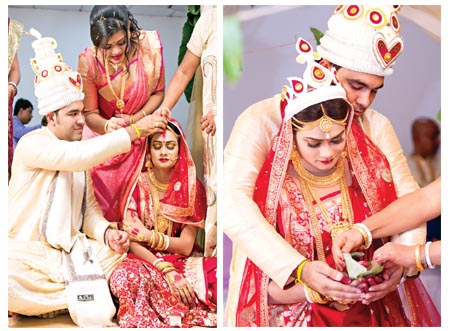
Aashirvaad: The groom's parents bless the couple and offer cloth or flower to the bride, symbolizing her joining of the groom's family. All those assembled shower flowers on the couple and bless them.
Kanya Danam (Giving away of the daughter): The bride accepts her change of status from an unmarried woman to a wife by spreading turmeric powder on her hands. Kana Danam is performed by the father (or uncle of guardian) of the bride in presence of a large gathering that is invited to witness the wedding. The father pours out a libation of sacred water symbolizing the giving away of the daughter to the bride groom. The groom recites Vedic hymns to Kama, the God of love, for pure love and blessings. As a condition for offering his daughter for marriage, the father of the bride requests a promise from the groom for assisting the bride in realizing the three ends : dharma, artha, and kama. The groom makes the promise by repeating three times that he will not fail the bride in realizing dharma, artha and kama.
Vivaaha (Wedding): The bride and the bridegroom face each other, and the priest ties their garments (the bride's saree to the groom's shirt) in a knot, symbolizing the sacred union. The bride and the bridegroom garland each other and exchange the rings. Next the nuptial fire, symbolizing the divine witness, and the sanctifier of the sacrament, is installed and worshipped. Both the bride and the groom grasp their hands together and pray to God for His blessings. Samagree, consisting of crushed sandalwood, herbs, sugar, rice, ghee (clarified butter), and twigs is offered into the sacred fire to seek God's blessings for the couple.
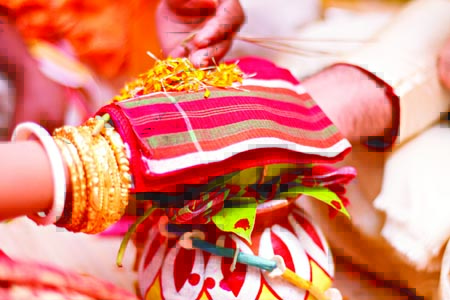
Mala-Badal (Garland exchange): 'Mala badal' is part of the traditional Bengali wedding ceremony that involves the exchange of flower garlands between the bride and bridegroom, and is supposed to mark the first time when the bride and the bridegroom set eyes on each other. It is a ritual that is carried forward from the past, as the practice of not seeing each other before is hardly practised these days. Nevertheless, the mala badal marks the first time during the wedding that the bride and the groom are allowed to see each other.
Agni Parinaya : The Circumambulation of the Fire
The bridegroom holds the bride by the hand and both walk seven times around the nuptial fire. Both offer oblations and recite appropriate Vedic hymns to Gods for prosperity, good fortune, and conjugal fidelity. They touch each others heart and pray for union of their hearts and minds while walking around the bridegroom repeats: "First now they bring to you in bridal procession this Surya, guiding her steps in circular motion. Return her now, O Agni, to her husband as rightful wife, with hope of children to come."Then the entire rite is repeated twice more, beginning with the rite of the fried grain. At the fourth round she pours into the re all the fried grain from the mouth of the winnowing basket saying: "To Bhaga svaha!"
Post-Marriage Ceremonies: The marriage is not over, just because the main ceremony is over. The bride and bridegroom go to their new home, and begin their new lives
Hindu Marriage Act in Bangladesh: Aiming to provide legal and social protection to Hindu women from marriage-related cheating, the Bangladesh Parliament has passed the Hindu marriage registration law. Passed on September 18, the law, first of its kind, has kept the provision of marriage registration optional. The mover of the bill, Qamrul Islam, State Minister for Law, Justice and parliamentary Affairs, said the government framed the act in the absence of any such regulation.
The 'Hindu Marriage Registration Bill-2012' authorises government authorities to appoint a Hindu Marriage Registrar at every ward and upzilla across the country. The registrar will not register marriage of a woman below 18 years of age and a man under 21 years.
Mahendi and Peethi: A day before the wedding the palm and feet of the bride are decorated with "Mahendi". A canopy or mandapa decorated with flowers is erected at the place of wedding. On the wedding morning, various rituals are performed on both the bride and the groom in their own homes. Their bodies are anointed with turmeric, sandalwood paste and oils, which cleanse the body, soften the skin, and make it aromatic. They are then bathed to the chanting of Vedic mantras.
The Marriage Ceremony: In a mandapa - canopy or marriage stage decorated with flowers and and with a fire as witness the Hindu marriage ceremony begins. It is a long and elaborate ceremony, with every step rooted in vedic tradition, signifying various aspects of live that is to follow after the marriage.
Baarat (Wedding Procession): The Bridegroom arrives for the wedding along with his family and friends in a procession. They are received by the bride's family and friends.
Commencement of Marriage: The priest commences the marriage under a canopy that is specially decorated for the ceremony. The priest invokes blessings of God for the couple to be married.
The bride offers yogurt and honey to the groom as a token of purity and sweetness. The bride greets the groom by placing a garland around his neck and the groom reciprocates. Both are congratulated by guests. The priest invokes the memory and blessings of forefathers of the bride and the groom for this auspicious occasion.hey are received by the bride's family and friends.
Aashirvaad: The groom's parents bless the couple and offer cloth or flower to the bride, symbolizing her joining of the groom's family. All those assembled shower flowers on the couple and bless them.
Kanya Danam (Giving away of the daughter): The bride accepts her change of status from an unmarried woman to a wife by spreading turmeric powder on her hands. Kana Danam is performed by the father (or uncle of guardian) of the bride in presence of a large gathering that is invited to witness the wedding. The father pours out a libation of sacred water symbolizing the giving away of the daughter to the bride groom. The groom recites Vedic hymns to Kama, the God of love, for pure love and blessings. As a condition for offering his daughter for marriage, the father of the bride requests a promise from the groom for assisting the bride in realizing the three ends : dharma, artha, and kama. The groom makes the promise by repeating three times that he will not fail the bride in realizing dharma, artha and kama.
Vivaaha (Wedding): The bride and the bridegroom face each other, and the priest ties their garments (the bride's saree to the groom's shirt) in a knot, symbolizing the sacred union. The bride and the bridegroom garland each other and exchange the rings. Next the nuptial fire, symbolizing the divine witness, and the sanctifier of the sacrament, is installed and worshipped. Both the bride and the groom grasp their hands together and pray to God for His blessings. Samagree, consisting of crushed sandalwood, herbs, sugar, rice, ghee (clarified butter), and twigs is offered into the sacred fire to seek God's blessings for the couple.
Mala-Badal (Garland exchange): 'Mala badal' is part of the traditional Bengali wedding ceremony that involves the exchange of flower garlands between the bride and bridegroom, and is supposed to mark the first time when the bride and the bridegroom set eyes on each other. It is a ritual that is carried forward from the past, as the practice of not seeing each other before is hardly practised these days. Nevertheless, the mala badal marks the first time during the wedding that the bride and the groom are allowed to see each other.
Agni Parinaya : The Circumambulation of the Fire
The bridegroom holds the bride by the hand and both walk seven times around the nuptial fire. Both offer oblations and recite appropriate Vedic hymns to Gods for prosperity, good fortune, and conjugal fidelity. They touch each others heart and pray for union of their hearts and minds while walking around the bridegroom repeats: "First now they bring to you in bridal procession this Surya, guiding her steps in circular motion. Return her now, O Agni, to her husband as rightful wife, with hope of children to come."Then the entire rite is repeated twice more, beginning with the rite of the fried grain. At the fourth round she pours into the re all the fried grain from the mouth of the winnowing basket saying: "To Bhaga svaha!"
Post-Marriage Ceremonies: The marriage is not over, just because the main ceremony is over. The bride and bridegroom go to their new home, and begin their new lives
Hindu Marriage Act in Bangladesh: Aiming to provide legal and social protection to Hindu women from marriage-related cheating, the Bangladesh Parliament has passed the Hindu marriage registration law. Passed on September 18, the law, first of its kind, has kept the provision of marriage registration optional. The mover of the bill, Qamrul Islam, State Minister for Law, Justice and parliamentary Affairs, said the government framed the act in the absence of any such regulation.
The 'Hindu Marriage Registration Bill-2012' authorises government authorities to appoint a Hindu Marriage Registrar at every ward and upzilla across the country. The registrar will not register marriage of a woman below 18 years of age and a man under 21 years.


