
Published: 08:17 AM, 17 May 2025
Anthracnose and Stem End Rot of Mango: Causes, Damage and Control Measures
Dr. Md. Mahfuz Alam
Mango (Mangifera indica L.) is one of the most popular and widely grown tropical fruits, prized for its unique flavor, aroma, and nutritional value. However, the quality and yield of mango are often threatened by a range of diseases. Among the most devastating are Anthracnose (caused by Colletotrichum gloeosporioides) and Stem End Rot (caused by Lasiodiplodia theobromae). These diseases significantly reduce mango productivity, marketability, and postharvest life, resulting in substantial economic losses globally.
This write-up provides a comprehensive overview of the causes, symptoms, damage, and control measures for anthracnose and stem end rot in mangoes, including recent advances in management practices and potential integrated disease management strategies.
Anthracnose of Mango
Cause
Anthracnose is primarily caused by the fungus Colletotrichum gloeosporioides. This pathogen is highly aggressive and can infect all parts of the mango tree, including flowers, leaves, stems, and fruits. The fungus thrives in warm, humid, and rainy conditions, making it particularly problematic in tropical and subtropical regions.
Symptoms
1. Leaf Infection: Small, dark, angular spots that expand to form large, irregular necrotic patches. Severe infections can lead to leaf blight and defoliation.
2. Flower Blight: Infected flowers turn dark brown, dry up, and may fall prematurely, significantly reducing fruit set.
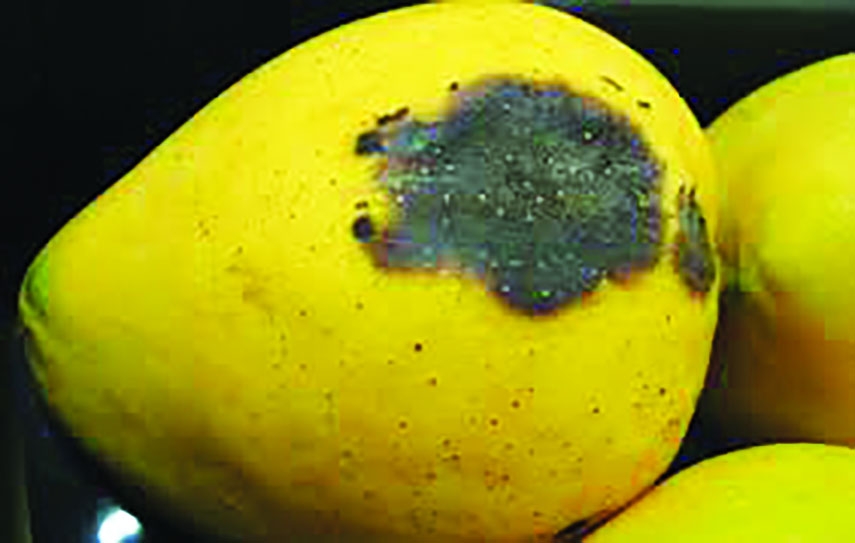
3. Fruit Infection: Immature fruits develop small, dark, sunken lesions that expand as the fruit matures. Ripe fruits show black, water-soaked spots that coalesce, forming extensive areas of decay.
4. Stem and Twigs: Dark, elongated lesions can girdle young shoots, causing dieback.
Disease Cycle and Epidemiology
The anthracnose pathogen survives in infected plant debris, mummified fruits, and latent infections within healthy-looking plant tissue. The disease spreads via rain splash, wind, insects, and contaminated tools. Optimum conditions for infection include warm temperatures (25-30°C), high humidity, and prolonged leaf wetness.
Damage
· Pre-harvest Losses: Reduced fruit set, leaf defoliation, twig dieback.
· Post-harvest Losses: Rapid decay, reduced market quality, and shortened shelf life.
· Economic Impact: Direct yield loss and increased management costs.
Control Measures
1. Preventive Measures:
· Regularly prune and maintain the trees to promote healthy growth and reduce disease pressure.
· Keep the area around the trees clean, removing any fallen leaves and debris to reduce sources of infection.
· Ensure proper drainage to prevent waterlogging in the orchard.
· Use disease-free saplings for planting.
2. Disease Control:
· Apply appropriate fungicides, such as Carbendazim, Mancozeb, or Copper oxychloride, from the flowering stage through to fruit harvest.
· Repeat sprays 2-3 times at 15-day intervals, depending on disease pressure and weather conditions.
· Prune branches regularly to improve air circulation within the canopy, reducing humidity and disease spread.
3. Flower Disease Prevention:
· To protect flower buds from fungal infections, apply Mancozeb group fungicides like Dithane M-45, Pencozeb, or Indofil M-45 at a rate of 2 gram per liter of water.
· The first spray should be applied when the mango inflorescence reaches approximately 10 cm in length.
· Apply a second spray when the young fruits reach the size of a small pea.
· This approach helps prevent early disease infections and significantly reduces premature fruit drop.
· If necessary, these fungicides can be mixed with insecticides for combined pest and disease management.
4. Large Fruit Disease Prevention:
· For larger fruits, consider using fruit bagging to prevent fungal infections and improve fruit quality.
· If bagging is not feasible, apply mancozeb group fungicides (e.g., Dithane M-45, Pencozeb, Indofil M-45) at a rate of 2 grams per liter of water, 2-3 times at 7-10 day intervals as soon as disease symptoms appear.
· This practice can significantly improve fruit quality and reduce post-harvest losses.
5. Biological Control:
· Application of biocontrol agents like Trichoderma harzianum or Bacillus subtilis to suppress pathogen activity.
6. Integrated Disease Management (IDM):
· Combining cultural, chemical, and biological methods for long-term, sustainable control.
7. Harvest and Storage:
· Harvest fruits at the proper maturity stage to ensure better flavor, quality, and shelf life.
· After harvesting, dip the fruits in hot water (52-55°C) for 10-15 minutes to reduce the risk of post-harvest fungal infections and extend storage life.
Stem End Rot of Mango
Cause
Stem end rot is caused by Lasiodiplodia theobromae. These pathogens typically infect the fruit through the stem, often remaining dormant until ripening.
Symptoms
· Dark, water-soaked lesions appear at the stem end of the fruit, spreading rapidly.
· Internal fruit tissue becomes brown and soft, often accompanied by a foul odor.
· In severe cases, the entire fruit collapses.
Disease Cycle and Epidemiology
The pathogens survive in infected branches, stems, and other plant debris. High temperature and humidity, along with poor harvesting practices, exacerbate disease spread.
Damage
· Pre-harvest Losses: Reduced fruit quality and increased drop rates.
· Post-harvest Losses: Significant decay during storage and transport.
Control Measures
1. Preventive Measures:
· Regularly prune and properly maintain the trees to reduce disease pressure and promote healthy growth.
· Keep the area around the trees clean, removing fallen leaves and debris to minimize sources of infection.
· Ensure proper field drainage to prevent waterlogging, which can increase the risk of fungal diseases.
· Use only certified, disease-free saplings when planting to reduce the introduction of pathogens.
2. Disease Control:
· Apply fungicides, such as those from the carbendazim group, before fruit harvest to reduce disease incidence.
· Repeat sprays 2-3 times at 15-day intervals, depending on weather conditions and disease pressure.
· After harvesting, dip the fruits in hot water at 52-55°C for 10-15 minutes to reduce the risk of post-harvest fungal infections.
3. Harvesting and Storage:
· Harvest fruits at the proper maturity stage to ensure better flavor, quality, and shelf life.
· Store the harvested fruits in a clean, dry place to reduce the risk of decay and maintain overall fruit quality.
4. Integrated Disease Management (IDM):
· Combining chemical, cultural, and biological methods for holistic control.
Conclusion
Both anthracnose and stem end rot pose significant challenges to mango production, affecting yield, quality, and profitability. Effective management requires a combination of cultural, chemical, and biological approaches, integrated with careful post-harvest handling and varietal selection. Ongoing research into disease-resistant cultivars and environmentally friendly control methods holds promise for more sustainable mango production.
Dr. Md. Mahfuz Alam is
Principal Scientific Officer at
Crops Division in Bangladesh Agricultural Research Council
(BARC), Dhaka.
Anthracnose of Mango
Cause
Anthracnose is primarily caused by the fungus Colletotrichum gloeosporioides. This pathogen is highly aggressive and can infect all parts of the mango tree, including flowers, leaves, stems, and fruits. The fungus thrives in warm, humid, and rainy conditions, making it particularly problematic in tropical and subtropical regions.
Symptoms
1. Leaf Infection: Small, dark, angular spots that expand to form large, irregular necrotic patches. Severe infections can lead to leaf blight and defoliation.
2. Flower Blight: Infected flowers turn dark brown, dry up, and may fall prematurely, significantly reducing fruit set.
3. Fruit Infection: Immature fruits develop small, dark, sunken lesions that expand as the fruit matures. Ripe fruits show black, water-soaked spots that coalesce, forming extensive areas of decay.
4. Stem and Twigs: Dark, elongated lesions can girdle young shoots, causing dieback.
Disease Cycle and Epidemiology
The anthracnose pathogen survives in infected plant debris, mummified fruits, and latent infections within healthy-looking plant tissue. The disease spreads via rain splash, wind, insects, and contaminated tools. Optimum conditions for infection include warm temperatures (25-30°C), high humidity, and prolonged leaf wetness.
Damage
· Pre-harvest Losses: Reduced fruit set, leaf defoliation, twig dieback.
· Post-harvest Losses: Rapid decay, reduced market quality, and shortened shelf life.
· Economic Impact: Direct yield loss and increased management costs.
Control Measures
1. Preventive Measures:
· Regularly prune and maintain the trees to promote healthy growth and reduce disease pressure.
· Keep the area around the trees clean, removing any fallen leaves and debris to reduce sources of infection.
· Ensure proper drainage to prevent waterlogging in the orchard.
· Use disease-free saplings for planting.
2. Disease Control:
· Apply appropriate fungicides, such as Carbendazim, Mancozeb, or Copper oxychloride, from the flowering stage through to fruit harvest.
· Repeat sprays 2-3 times at 15-day intervals, depending on disease pressure and weather conditions.
· Prune branches regularly to improve air circulation within the canopy, reducing humidity and disease spread.
3. Flower Disease Prevention:
· To protect flower buds from fungal infections, apply Mancozeb group fungicides like Dithane M-45, Pencozeb, or Indofil M-45 at a rate of 2 gram per liter of water.
· The first spray should be applied when the mango inflorescence reaches approximately 10 cm in length.
· Apply a second spray when the young fruits reach the size of a small pea.
· This approach helps prevent early disease infections and significantly reduces premature fruit drop.
· If necessary, these fungicides can be mixed with insecticides for combined pest and disease management.
4. Large Fruit Disease Prevention:
· For larger fruits, consider using fruit bagging to prevent fungal infections and improve fruit quality.
· If bagging is not feasible, apply mancozeb group fungicides (e.g., Dithane M-45, Pencozeb, Indofil M-45) at a rate of 2 grams per liter of water, 2-3 times at 7-10 day intervals as soon as disease symptoms appear.
· This practice can significantly improve fruit quality and reduce post-harvest losses.
5. Biological Control:
· Application of biocontrol agents like Trichoderma harzianum or Bacillus subtilis to suppress pathogen activity.
6. Integrated Disease Management (IDM):
· Combining cultural, chemical, and biological methods for long-term, sustainable control.
7. Harvest and Storage:
· Harvest fruits at the proper maturity stage to ensure better flavor, quality, and shelf life.
· After harvesting, dip the fruits in hot water (52-55°C) for 10-15 minutes to reduce the risk of post-harvest fungal infections and extend storage life.
Stem End Rot of Mango
Cause
Stem end rot is caused by Lasiodiplodia theobromae. These pathogens typically infect the fruit through the stem, often remaining dormant until ripening.
Symptoms
· Dark, water-soaked lesions appear at the stem end of the fruit, spreading rapidly.
· Internal fruit tissue becomes brown and soft, often accompanied by a foul odor.
· In severe cases, the entire fruit collapses.
Disease Cycle and Epidemiology
The pathogens survive in infected branches, stems, and other plant debris. High temperature and humidity, along with poor harvesting practices, exacerbate disease spread.
Damage
· Pre-harvest Losses: Reduced fruit quality and increased drop rates.
· Post-harvest Losses: Significant decay during storage and transport.
Control Measures
1. Preventive Measures:
· Regularly prune and properly maintain the trees to reduce disease pressure and promote healthy growth.
· Keep the area around the trees clean, removing fallen leaves and debris to minimize sources of infection.
· Ensure proper field drainage to prevent waterlogging, which can increase the risk of fungal diseases.
· Use only certified, disease-free saplings when planting to reduce the introduction of pathogens.
2. Disease Control:
· Apply fungicides, such as those from the carbendazim group, before fruit harvest to reduce disease incidence.
· Repeat sprays 2-3 times at 15-day intervals, depending on weather conditions and disease pressure.
· After harvesting, dip the fruits in hot water at 52-55°C for 10-15 minutes to reduce the risk of post-harvest fungal infections.
3. Harvesting and Storage:
· Harvest fruits at the proper maturity stage to ensure better flavor, quality, and shelf life.
· Store the harvested fruits in a clean, dry place to reduce the risk of decay and maintain overall fruit quality.
4. Integrated Disease Management (IDM):
· Combining chemical, cultural, and biological methods for holistic control.
Conclusion
Both anthracnose and stem end rot pose significant challenges to mango production, affecting yield, quality, and profitability. Effective management requires a combination of cultural, chemical, and biological approaches, integrated with careful post-harvest handling and varietal selection. Ongoing research into disease-resistant cultivars and environmentally friendly control methods holds promise for more sustainable mango production.
Dr. Md. Mahfuz Alam is
Principal Scientific Officer at
Crops Division in Bangladesh Agricultural Research Council
(BARC), Dhaka.


