Published: 09:29 AM, 13 January 2026
Donald Trump’s Petro Bullying Gambits With Venezuelan Oil Rigs Gobbled Up
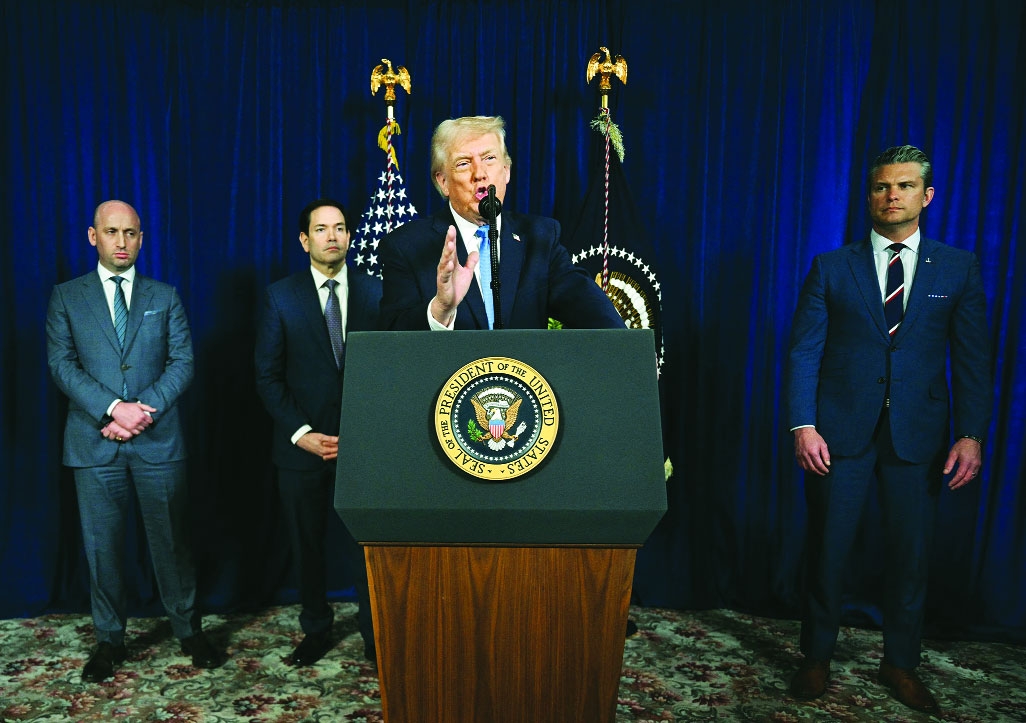
US President Donald Trump announced on 6 January 2026 evening that he has struck a deal with Venezuela's interim authorities for the transfer of a large quantity of oil to the United States.
In a post on his social media network Truth Social, Donald Trump wrote that the Latin American nation would be "turning over" between 30 and 50 million barrels of "sanctioned oil." The Venezuelan government has willy-nilly consented to that deal.
Venezuelan oil is under US sanctions because Washington accuses the government of ousted leader Nicolas Maduro of corruption, repression and rigging elections.
Relations between the two countries have been strained since 1999, when left-wing populist Hugo Chavez became president of Venezuela. Chavez then accused the US of supporting an attempted coup against him in 2002 before Venezuela expelled its US ambassador later that year.
Donald Trump's deal comes days after the US captured Nicolas Maduro, the longtime socialist leader who ruled Venezuela for more than a decade.
Donald Trump framed the deal as both an economic opportunity for both countries and a humanitarian measure, as Venezuelans continue to face severe shortages of food, medicine and basic services due to years of mismanagement and corruption.
Trump said the US government would sell the oil at market prices and that the income generated would be controlled directly by him "to ensure it is used to benefit" Venezuelans and Americans.
Oil prices dropped on the news, with West Texas Intermediate (WTI) down 0.7% at $56.73 per barrel at lunchtime UTC/GMT.
Few operational details about the deal were revealed by Trump, or over what period the oil transfer would take place.
The oil would most likely come from existing stockpiles, energy analysts said.
But 30 to 50 million barrels is the equivalent of one to two months of Venezuelan oil production.
Early estimates from Bloomberg suggest the oil could be worth up to $2.8 billion (€2.4 billion) at current prices.
Venezuela sits on about a fifth of the world's oil reserves and used to be a leading oil producer. But after years of decline, today it contributes less than 1% of global output.
The US President is due to meet top oil executives at the White House on Friday to discuss US investments to rebuild oil production infrastructure in Venezuela, news agencies reported Wednesday.
Despite Donald Trump's bullishness, industry analysts believe creaking infrastructure and low prices could prevent a quick ramp-up of oil output.
The issue isn’t quantity, but compatibility. Most US output is light crude, while many American refineries are built to process heavy crude into gasoline (petrol), diesel and other products critical for the US economy. For decades, Venezuelan oil filled that niche.
Today, the US imports heavy crude from countries like Canada and Mexico to keep those refineries running efficiently.
The American Fuel and Petrochemical Manufacturers trade association notes that using the right blend of crude is essential to "keep refineries efficient, keep costs down and maintain energy security."
Re-engineering those refineries, especially along the Gulf Coast, to run solely on US light crude would cost billions and take decades — a risk the oil sector has little appetite for.
Despite the collapse in Venezuela's production, the country still sits on the largest heavy-oil deposits in the world, making renewed access a strategic prize for US refiners.
If Donald Trump succeeds in bringing Venezuelan oil back into circulation, it would give Washington more leverage over Canada, whose oil industry relies on the US market for nearly all its exports.
Canada sends about 4 million barrels of oil a day to US refineries, much of it the same type of heavy crude that Venezuela produces.
Analysts warn it could weaken Canada’s position in future energy disputes, especially as domestic producers already face tight margins and limited pipeline capacity.
It would also add pressure to already-frayed US-Canada trade ties, which have faced repeated clashes over tariffs and trade rules since Donald Trump returned to the White House last year.
Mexico faces a similar, though less immediate, impact. The country exports roughly 600,000 barrels a day to the US, including heavy crude.
If more Venezuelan oil were to come on stream, Mexico could be forced to diversify its supplies or speed up refinery upgrades, which would prove costly.
Different news agencies reported on 7 January 2026 that the Trump administration informed interim President Delcy Rodriguez that Venezuela should partner solely with the US on oil and prioritize American buyers.
Reports have surfaced that Washington is also urging Caracas to distance itself from China, Russia, Iran and Cuba, which, if enacted, would mark a huge geopolitical shift.
If Rodriguez complies with Donald Trump's request, China, which receives more than two-thirds of Venezuela's oil exports, would lose access to one of its biggest sources of discounted crude.
Beijing described last weekend's military action by the US in Venezuela as "typical acts of bullying."
"These actions seriously violate international law, gravely infringe upon Venezuela's sovereignty and severely damage ?the rights of the Venezuelan people," Chinese Foreign Ministry spokesperson Mao Ning told a news conference last week.
Russia and Iran, meanwhile, would see a key political ally pulled firmly into Washington’s orbit, while Cuba, which relies heavily on subsidized Venezuelan oil, would be hit hardest, facing even deeper fuel shortages and economic strain.
For years, much of Venezuela’s sanctioned crude has moved through a so-called dark fleet of tankers that switch off tracking systems and use shell companies to hide their routes.
Most of that oil ultimately flows to China, with smaller volumes reaching India and other Asian buyers.
A US blockade, in force since mid-December, has now forced many of those ships to flee or halt operations, Bloomberg reported on 7 January 2026.
In a further development, the US said a couple of days ago it had seized two sanctioned oil tankers linked to Venezuela, one in the North Atlantic and the other in Caribbean waters, the Associated Press (AP) reported.
On the other hand, Bloomberg said US energy giant Chevron has quickly stepped in to fill the gap, lining up 11 tankers to move Venezuelan crude to US refiners.
Chevron is now the only Western company still operating in Venezuela.
Donald Trump issued a not-so-veiled threat against the new Venezuelan leader, Delcy Rodríguez, saying that “if she doesn’t do what’s right, she is going to pay a very big price, probably bigger than Nicolas Maduro,” referring to Nicolás Maduro, now residing in a New York City jail cell. Donald Trump made clear that he would not stand for Delcy Rodríguez’s defiant rejection of the armed U.S. intervention that resulted in Nicolas Maduro’s capture.
Mahfuz Ul Hasib Chowdhury
is a contributor to different
English newspapers and magazines.