Published: 12:05 AM, 27 April 2026
Our Workers, Our Fuel, Our Silence: Bangladesh in the Shadow of the Iran–Israel–US War
Dr. Mohammed A Rab
Somewhere in Saudi Arabia, a Bangladeshi worker is watching the news on his phone and wondering whether he will have a job next month. Somewhere in Chittagong, his family is watching the price of cooking gas and wondering how they will manage. And somewhere in Dhaka, our government is watching Washington and Tel Aviv bomb a Muslim country into submission and saying, very carefully, nothing at all. The Iran–Israel–US war, now in its second month of a precarious ceasefire, is not a distant geopolitical event. It is arriving at our doorstep in the form of canceled flights, rising fuel prices, lost remittances, and a diplomatic silence that is beginning to cost us more than it saves.
A War Built on Decades of Injustice
To understand this conflict, we must be honest about how it began. The roots do not lie solely in Iranian aggression. They lie in the unresolved dispossession of the Palestinian people, in the West's decades-long tolerance of Israeli military occupation and bombardment of Gaza, and in the United States' unconditional support for Israeli military action regardless of its human cost. Iran, for all the brutality of its clerical regime, built its regional influence precisely by positioning itself as the one power willing to resist that order. Hamas, Hezbollah, the Houthis, these are not creations of Iranian malice alone. They are products of a region where international law has been applied selectively, and justice consistently denied.
This does not excuse Iran's support for armed groups that have killed civilians, nor does it excuse the Iranian state's repressive conduct toward its own people. But it does mean that any honest account of this war must acknowledge that the United States and Israel did not simply respond to Iranian aggression. They launched one of the most intensive bombing campaigns in the modern history of the Middle East, targeting a sovereign nation's leadership, military, and nuclear infrastructure without any framework of international law or UN authorization. The world's most powerful military alliance bombed a country of 90 million people. That context matters and is largely absent from Western coverage of this war.
What Has Been Done in Our Region
The past year's events have been devastating. In June 2025, Israel launched Operation Rising Lion, killing Iran's top military commanders and nuclear scientists. The United States joined days later, striking Iran's nuclear facilities at Fordow, Natanz, and Isfahan. A ceasefire ended the Twelve-Day War on 24 June, but not before 1,190 Iranians were killed, and a US airstrike on Evin Prison killed 79 people, including a child, in what a UN mission called an apparent war crime. Seven months later, economic collapse and a brutal crackdown on protesters killed thousands more. On 28 February 2026, the US and Israel launched Operation Epic Fury, killing Supreme Leader Ayatollah Khamenei in nearly 900 strikes over twelve hours. The most unconscionable moment came when a misdirected American Tomahawk struck the Shajareh Tayyebeh girls' primary school near Minab, killing approximately 170 people - most of them schoolgirls aged seven to twelve. The Pentagon called it an intelligence error. For their families, it was a massacre.
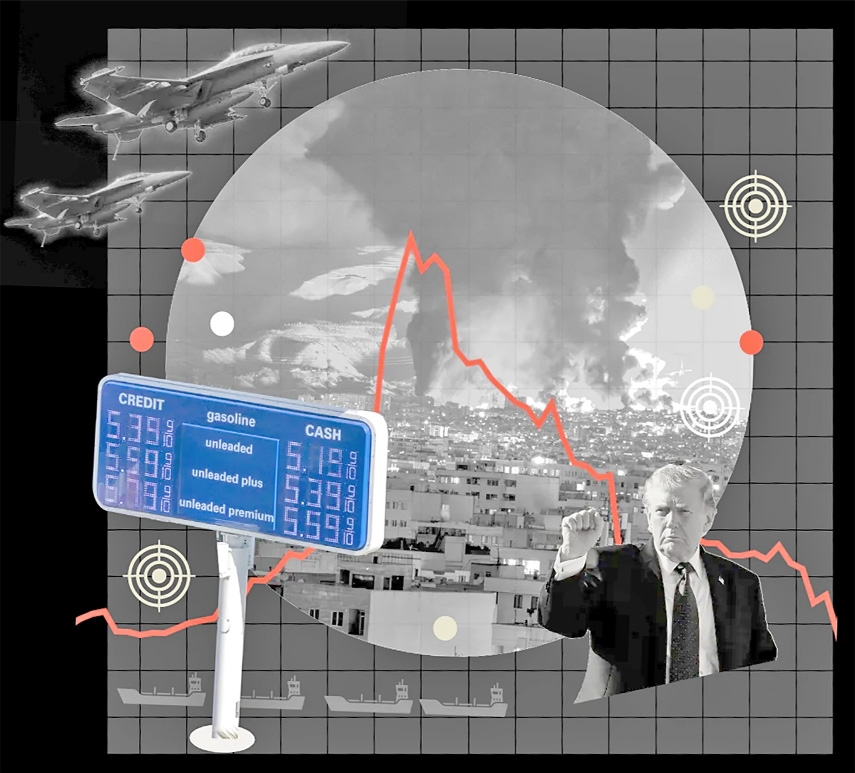
Iran retaliated with strikes on Gulf airports, Saudi oil facilities, and American bases. A US naval blockade has been in place at Iranian ports since April. On 22 April, Iran seized two container ships in the Strait of Hormuz in response to an American boarding of an Iranian vessel. As of today, a ceasefire extended indefinitely on 21 April holds - tenuously - while US envoys and Iranian diplomats circle each other in Islamabad, neither side willing to yield on the central question of Iran's right to enrich uranium. The guns are silent. The grievances are not.
The Price We Are Paying
Bangladesh has approximately 4.5 million workers registered in the Gulf; the true figure, including undocumented migrants, is closer to 8 million. These men and women left their families, endured exploitation and hardship, and built lives in countries that are now in the middle of a war zone. They sent home $32.8 billion last year - money that kept families out of poverty, paid for children's schooling, and kept the national economy afloat. At least seven of them have been killed since February. Hundreds of thousands more face job insecurity as Gulf economies absorb the shock of oil disruption, infrastructure damage, and regional instability.
The economic consequences at home are already severe. The World Bank has cut Bangladesh's GDP growth forecast from 4.6 percent to 3.9 percent, projecting that 1.2 million people could be pushed back below the poverty line. Our primary LNG suppliers, Oman and Qatar, have invoked force majeure on their contracts. Brent crude reached $119 per barrel in March, triggering fuel rationing, early school closures, and emergency purchases from alternative suppliers at premium prices. Emigration clearances to the Middle East fell by 53 percent in a single quarter. More than 900 flights to the Middle East have been canceled since February. The IOM evacuated 186 Bangladeshis from Iran overland through Azerbaijan in March - a reminder that our citizens were caught in the war, not merely watching it from a distance.
Iran, for its part, has granted safe passage through the Strait of Hormuz for six Bangladeshi fuel tankers - a gesture that acknowledged Bangladesh's vulnerability and, it should be said, our government's parliamentary condolences over Khamenei's death. But Tehran has also made plain that it is dissatisfied with Dhaka's refusal to take a clearer position on the conflict. Our government has called for "maximum restraint" from all parties - language so carefully balanced it says nothing. Iran's ambassador has publicly called it ambiguous. He is not wrong.
The Silence That Is Costing Us
Bangladesh has a long tradition of standing with the oppressed. We were born out of a war of liberation in which the great powers largely looked away. We have consistently supported the Palestinian cause at the United Nations. We have sent peacekeepers to conflict zones around the world. Our people feel, viscerally, the injustice of watching a Muslim country bombed - its schools, its prisons, its leadership compound - while the Security Council is paralyzed by American and British vetoes. That sentiment is not propaganda. It is the honest moral response of a people who understand what it means to be at the receiving end of overwhelming military force.
Our government's silence does not reflect that sentiment. It reflects a calculation: Bangladesh needs good relations with the United States, which is a major export destination for our garments and a source of development assistance. It needs good relations with Saudi Arabia and the Gulf states, which employ our workers. It needs good relations with Iran, which controls the Strait through which our fuel travels. Threading that needle has led to a position so neutral it has become meaningless - and may, in the long run, leave us with no strong advocates anywhere.
What Bangladesh Must Demand
Bangladesh cannot stop this war. But we have more voice than we are using, and more at stake than our diplomatic statements acknowledge. Three things are urgently needed.
First, we must speak clearly about civilian protection. The killing of 170 schoolgirls in Minab was not collateral damage; it was the predictable consequence of a military campaign conducted with contempt for civilian life. Bangladesh should join the global call for an independent international investigation, speak through the OIC and the Non-Aligned Movement, and refuse to normalize the notion that such deaths are an acceptable price for geopolitical objectives. Our silence on Minab, while we were quick to accept the Iranian ambassador's goodwill gestures, sends a message we should not wish to send.
Second, we must urgently protect our workers and our economy. Emergency bilateral labor agreements for conflict scenarios, expanded consular capacity at high-risk postings, and genuine diversification of energy supply - away from single-strait dependence on Gulf LNG - are not long-term aspirations. They are immediate necessities. The fuel rationing in March 2026 was a warning. The next disruption may be worse.
Third, we must engage diplomatically with conviction, not merely caution. Bangladesh should advocate loudly for reopening the Strait of Hormuz to civilian shipping, for resuming IAEA inspections, and for a permanent ceasefire tied to a genuine political process that addresses Palestinian rights, not as a bargaining chip, but as the foundational injustice that has fueled this region's instability for decades. We have more credibility in the Global South than we use. A Bangladesh that speaks with moral clarity earns more protection for its workers and interests than one that calculates its words into silence.
The ceasefire holds today. It may not be held tomorrow. What is certain is that the Middle East of the coming decade will be shaped by the choices made in the next few months and that Bangladesh, whether it chooses to engage or to stay silent, will live with the consequences. Our workers are already living with them. It is time our foreign policy caught up.
Dr. Mohammed A Rab is a
researcher and a geopolitical
analyst based in the United States.