Published: 12:35 AM, 28 April 2026
SSC Examinations: Break Down the Walls of Fear and Spread the Message of Love
Md. Nazmul Huda Masud
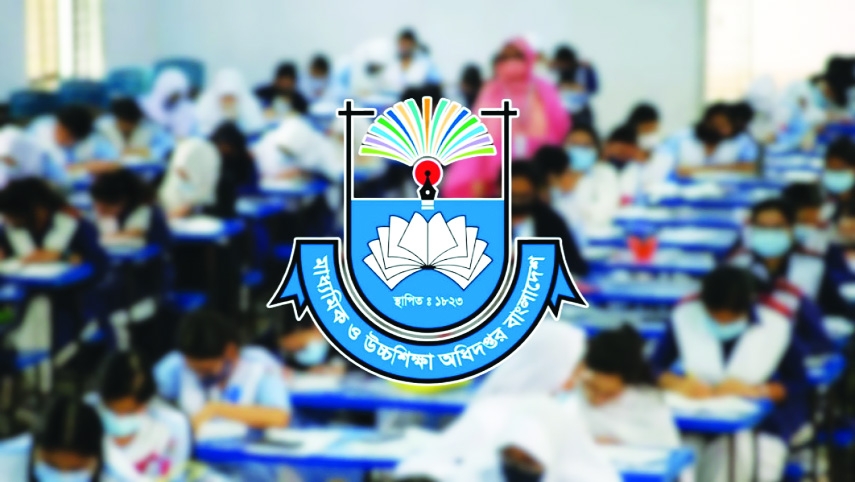
In Bangladesh, the SSC examination often feels like an invisible pressure, an unknown fear. For students, it is not just a public exam; rather, it is the first major milestone of their lives. From family, society, and even educational institutions, an unspoken burden of expectation is placed on their shoulders. As a result, for many, SSC becomes synonymous with anxiety. Yet, education should be a joyful, inspiring, and humane process of development. Therefore, the time has come to break this wall of fear and spread a message of compassion.
The mindset surrounding examinations in our society is largely competition-driven. Who scored how much, who ranked first—these questions seem to define educational success. But can a student’s intelligence, critical thinking, creativity, or moral values truly be measured by a single number? Reality says it cannot. Yet, we continue to evaluate students based on this incomplete measure, creating unnecessary fear and frustration among them.
Before the SSC exam, the pressure in students’ lives often becomes overwhelming. From morning to night, continuous studying, coaching classes, and model tests make it feel like they are running an endless race. Opportunities for recreation, rest, or creative activities become very limited. This can disturb their mental balance. In many cases, poor exam results lead students to lose confidence and even develop negative attitudes toward life—something deeply concerning.
In this context, the role of parents is extremely important. Often unknowingly, they put excessive pressure on their children. Phrases like “You must do well” or “You can’t score less than others” create fear and anxiety. Instead, parents should understand their child’s mental state, appreciate their efforts, and teach them to accept failure as a natural part of life. A safe and compassionate family environment can make a student truly confident. Teachers also have a crucial role. They are not just providers of knowledge but also key architects of a student’s mental development. Rather than creating fear around exams, they should present them as a normal evaluation process. Encouraging classroom environments, motivating students to ask questions, and accepting mistakes as part of learning—all help build a positive mindset among students.
In the current education system, the tendency toward rote memorization remains strong. Many students memorize specific parts of textbooks just to score well, without understanding the depth of the subject. This limits the development of their creative thinking. Change is necessary. The curriculum and examination system should emphasize analytical questions, real-life problem-solving, and creativity. The role of the media is also significant. After results are published, attention is often given only to top scorers, making other students feel less important. Instead, stories of diverse success—such as overcoming struggles or succeeding through alternative paths—should be highlighted, helping students realize that success does not follow a single route.
Additionally, mental health support systems need to be strengthened. Introducing counseling services at the school level and teaching students how to cope with stress can be highly effective. Many students cannot share their problems, leading to loneliness. A compassionate counseling system can help alleviate that isolation.
There is still a common misconception in our society—that good results guarantee success in life. However, real life shows that many people with average academic results have achieved remarkable success. This is because success requires perseverance, creativity, leadership, communication skills, and mental resilience—qualities that cannot be fully measured by exam results.
Therefore, the SSC examination should be viewed as a part of life, not the ultimate goal. Students need to understand that it is just one step in their journey. If this realization is instilled in them, they will face exams with confidence rather than fear.
In conclusion, it is time to change our perspective on the SSC examination. Instead of fear, we must create an environment of love, empathy, and support. Through the combined efforts of families, teachers, and society, it is possible to build a stress-free, humane, and positive education system.
To the students, there is only one message—try your best and give your fullest effort. Whatever the result, life is much bigger than that. We are with you.
Only then will the wall of fear truly break, and the message of compassion will reach every student’s heart. The SSC examination will no longer be a source of fear, but a new horizon of confidence and possibility.
Md. Nazmul Huda Masud is Maintenance Engineer, Special
Branch (SB), Bangladesh Police and Joint Secretary (Academic),
Bangladesh Computer Society.