Published: 12:42 AM, 08 May 2026
Human Rights Agencies and Global Sycophancy
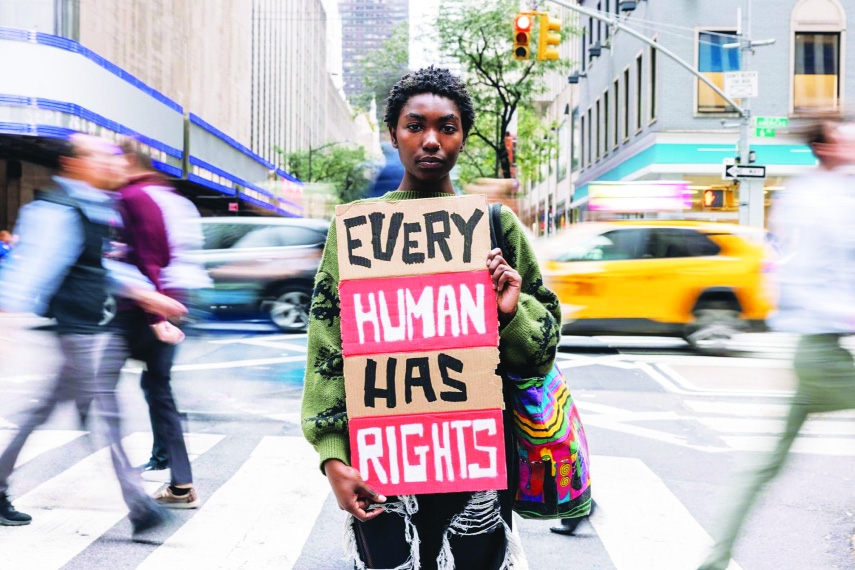
International human rights organizations—Amnesty International, the Asian Federation Against Involuntary Disappearances (AFAD), the Asian Forum for Human Rights and Development (FORUM-ASIA), the Asian Human Rights Commission, the Asian Network for Free Elections (ANFREL), the Capital Punishment Justice Project, CIVICUS: World Alliance for Citizen Participation, Human Rights Watch, the International Federation for Human Rights, Robert F. Kennedy Human Rights, The Advocates for Human Rights, and the World Organization Against Torture (OMCT)—were born of noble aspirations.
Their founding vision was simple yet profound: to stand as moral sentinels against tyranny, to defend the voiceless, and to hold power accountable wherever it manifests.
Yet, in the harsh glare of contemporary geopolitics, a disturbing perception has taken root among critics: that many of these institutions have drifted from principled independence into a posture of selective indignation, shaped—whether consciously or structurally—by the gravitational pull of global superpower interests.
What once aspired to be an uncompromising moral force is increasingly accused of becoming entangled in the very systems of power it was designed to scrutinize.
This analysis engages with that troubling claim through the lens of Bangladesh, a nation whose recent political turbulence has once again exposed the fragility of international accountability mechanisms.
Bangladesh today stands at the intersection of external geopolitical influence and domestic political contestation, where narratives of legitimacy and illegitimacy are fiercely contested.
In this context, the silence—or at best the muted response—of major human rights organizations to certain political developments has raised serious questions about consistency, impartiality, and courage.
Particularly controversial is the political rupture of 5 August 2024, when Prime Minister Sheikh Hasina was removed from office in circumstances widely described by critics as externally influenced and politically engineered by elite networks aligned with foreign interests.
Her ouster and the subsequent emergence of a transitional authority under Dr. Muhammad Yunus have been interpreted by some observers as a recalibration of power rather than a democratic transition.
Yet, what has drawn particular scrutiny is not only the event itself, but the relatively restrained reaction of influential international human rights bodies, many of which have historically spoken forcefully on comparable crises elsewhere.
Critics argue that this inconsistency reveals a deeper structural bias in global human rights advocacy: the tendency to amplify certain violations while muting others, depending on geopolitical alignment, donor ecosystems, or strategic narratives shaped in Western capitals.
In such a framework, human rights risk becoming less a universal moral language and more a selective diplomatic instrument.
My own perspective is inevitably shaped by lived history. As a survivor and participant in the 1971 Bangladesh Liberation War, I witnessed the brutal rupture through which Bangladesh emerged as a sovereign nation, scarred by immense sacrifice and mass atrocities.
That founding moment was not merely political; it was moral and existential. It promised a nation built upon dignity, justice, and freedom from domination. Yet, decades later, I observe with profound concern what I perceive as a recurring betrayal of those foundational ideals—both internally and in the way the international system responds to crises within Bangladesh.
In recent years, allegations have emerged regarding arbitrary arrests, suppression of dissent, political intimidation, and violence against opposition figures. Whether under transitional arrangements or subsequent administrations, these claims point to a persistent struggle over the rule of law and democratic space.
However, what has particularly intensified criticism been the burning example that international watchdogs have not responded with the same urgency or consistency as they have in other global contexts. This detected asymmetry fuels accusations of moral selectivity and geopolitical convenience.
At the broader institutional level, attention inevitably turns to global governance bodies such as the United Nations, the International Monetary Fund (IMF), and the World Bank. While these institutions are not human rights organizations in the strict sense, their policy influence profoundly shapes political and economic realities across the Global South.
Critics contend that their frameworks often prioritize macroeconomic stability and strategic alliances over human rights enforcement, thereby indirectly reinforcing unequal global structures. In this reading, neutrality becomes indistinguishable from complicity when injustice is left unchallenged.
Moreover, attributing Bangladesh’s political complexities solely to external manipulation risks is not oversimplification. Also, the nation’s internal dynamics—its entrenched political rivalries, historical grievances, civil-military relations, and evolving institutional weaknesses—form an equally decisive part of the equation.
External influence may intersect with domestic vulnerabilities. Any serious analysis must therefore resist the temptation of monocausal - monoceros explanations.
Even so, the central concern remains valid: the gross erosion of universalism in human rights advocacy. When principles appear to bend under geopolitical pressure, trust in international institutions inevitably weakens.
The legitimacy of human rights discourse depends not only on its moral foundation but on its consistent application across contexts, irrespective of strategic convenience.
What, then, is the way forward? The answer lies not in dismantling the existing human rights architecture, but in reforming it toward greater transparency, independence, and intellectual honesty.
International human rights organizations must consciously guard against selective outrage and ensure that accountability mechanisms are applied uniformly.
Equally, they must strengthen their autonomy from state donors and geopolitical blocs whose interests may subtly shape advocacy priorities.
A renewed commitment to universality is not a rhetorical aspiration; it is an operational necessity.
Without it, the credibility of global human rights institutions will continue to erode, leaving a vacuum that neither states nor markets can ethically fill.
The defence of human dignity must remain insulated from the logic of great-power rivalry.
Ultimately, this reflection is not an indictment born of cynicism, but a plea for renewal.
The global human rights system stands at a critical juncture. It can either continue along a path of deliberate selectivity under cloak-and-dagger and diminishing trust, or it can reclaim its founding ethos as an impartial guardian of human dignity.
The urgency of this moment demands rigorous self-examination.
A comprehensive reassessment—perhaps even a structured SWOT analysis of global human rights governance—is essential if these institutions are to remain relevant in an increasingly fragmented world. Only through such honest introspection can they restore their moral authority and reaffirm their role as true defenders of humanity, rather than reluctant observers of its suffering showing only servility to the western superpowers.
Anwar A. Khan is a freedom
fighter and a columnist
on contemporary issues.