Published: 12:42 AM, 11 May 2026
Beyond the Waiting Game: Why Bangladesh Must Reclaim Agency on Teesta Issue
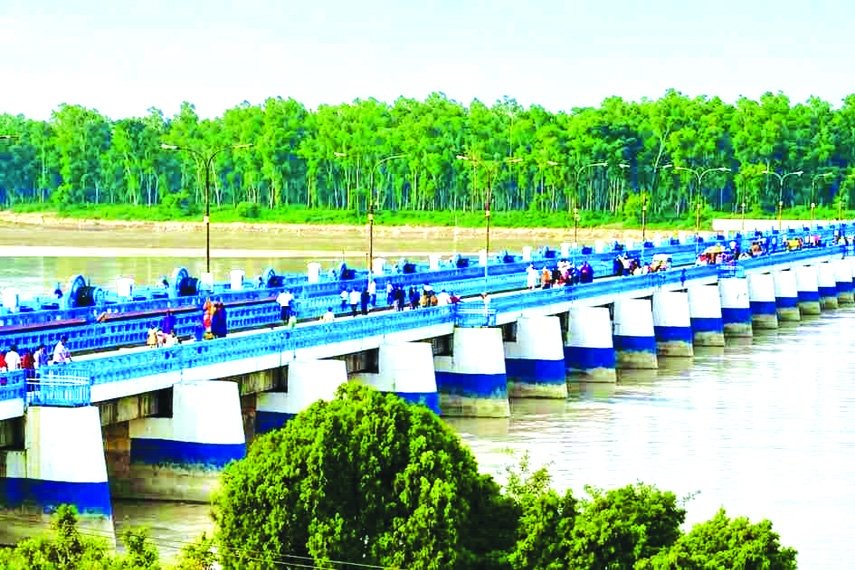
For decades, the Teesta River has symbolized both the promise and the frustration of Bangladesh–India relations. Flowing through the Himalayan foothills into northern Bangladesh, the river sustains millions of livelihoods, nourishes agricultural land, and shapes the ecological balance of an entire region. Yet despite years of negotiations, diplomatic assurances, and political declarations, a comprehensive Teesta water-sharing agreement remains elusive.
Now, recent political developments in India—particularly the electoral victory of Suvendu Adhikari from BJP and the shifting power dynamics in West Bengal—have reignited discussion about whether the long-stalled Teesta agreement may finally move forward. For years, West Bengal politics acted as one of the principal domestic obstacles to the deal. Opposition from the state leadership repeatedly complicated New Delhi’s ability to conclude an agreement with Dhaka, even when bilateral relations between Bangladesh and India appeared exceptionally warm.
Many observers now believe that the changing political landscape could create new opportunities. But Bangladesh must resist the temptation to interpret every political shift in India as a reason for passive optimism. That has been the strategic mistake for too long.
The core lesson of the Teesta issue is not that Bangladesh needs to wait for India to become politically ready. The lesson is that Bangladesh must become strategically ready itself. The future of the Teesta cannot depend entirely on electoral outcomes in another country. That is precisely why Bangladesh now needs a more proactive, independent, and forward-looking policy centered on the Teesta Master Plan and broader national water security strategy.
The Cost of Endless Waiting
Bangladesh has already spent years trapped in a diplomatic cycle of expectation. Every new election in India, every cabinet reshuffle, every state-level political realignment has triggered renewed speculation that the Teesta deal is ‘close.’ Yet the fundamental reality has remained unchanged: northern Bangladesh continues to suffer from water scarcity, ecological imbalance, declining agricultural productivity, and increasing climate vulnerability.
For farmers in Rangpur, Lalmonirhat, Nilphamari, Kurigram and Gaibandha, the Teesta is not merely a geopolitical subject. It is an everyday economic reality. During the dry season, large portions of the river become dangerously depleted. Agricultural land struggles under irrigation shortages. Fishing communities lose income. River-dependent ecosystems deteriorate. Seasonal migration increases. Poverty deepens.
Meanwhile, climate change is intensifying the crisis. South Asia’s river systems are increasingly unpredictable, marked by both extreme flooding and severe dry-season scarcity. Waiting indefinitely for a diplomatic breakthrough while these structural pressures worsen is not strategic patience—it is national vulnerability.
Bangladesh therefore faces a fundamental question: should its northern development remain hostage to political calculations elsewhere, or should it build its own long-term resilience regardless of external delays? The answer should now be obvious.
The Teesta Master Plan Changes the Equation
This is where the Teesta Master Plan becomes critically important. Rather than viewing the Teesta issue solely through the narrow lens of water-sharing diplomacy, the Master Plan reframes the river as a comprehensive development corridor. It integrates irrigation, river management, climate adaptation, infrastructure modernization, ecological restoration, and regional economic transformation into a single strategic vision. That distinction matters enormously.
A traditional diplomatic framework treats Bangladesh as a petitioner waiting for upstream concessions. The Master Plan instead positions Bangladesh as an active architect of its own river future. This is not merely a technical shift. It is a psychological and geopolitical shift.
The Teesta Master Plan recognizes that effective water management in the twenty-first century cannot depend exclusively on bilateral treaties. Countries must also invest in internal capacity: river dredging, reservoir systems, flood control, irrigation modernization, renewable energy integration, climate resilience infrastructure, smart agriculture, and regional connectivity. In other words, Bangladesh must prepare not only for an agreement—but also for the possibility of prolonged uncertainty. That is what mature statecraft looks like.
Water Security Is National Security
Too often, the Teesta issue is discussed as a diplomatic irritant rather than a national strategic priority. That framing understates the stakes. Water security today is inseparable from food security, economic security, climate security, and even political stability.
Northern Bangladesh represents one of the country’s most agriculturally important regions. If water scarcity intensifies, the effects will ripple far beyond local communities. Crop yields may decline. Rural incomes may deteriorate. Internal migration pressures could increase. Economic inequality between regions could deepen.
Moreover, global experience shows that unmanaged water crises frequently evolve into broader social and political crises. Bangladesh therefore cannot afford a reactive posture. The country needs a long-term Teesta strategy built on three pillars:
· Diplomatic engagement with India
· Independent national infrastructure development
· Integrated climate adaptation planning
These pillars must work simultaneously—not sequentially.
Bangladesh should absolutely continue pursuing a fair and equitable water-sharing agreement with India. Constructive diplomacy remains essential. Geography ensures that cooperation between the two countries is unavoidable. But diplomacy without domestic preparedness creates dependence. Preparedness without diplomacy creates isolation. Bangladesh needs both.
The Danger of Over-Personalizing Diplomacy
Another mistake Bangladesh must avoid is over-personalizing the Teesta issue around individual Indian politicians or political parties. Today’s optimism surrounding changes in West Bengal politics may prove temporary. Indian federal politics is highly dynamic. Coalitions shift. Electoral fortunes change. Regional interests evolve.
If Bangladesh ties its strategic expectations too closely to specific personalities or electoral outcomes, it risks repeating the same cycle of disappointment. The Teesta issue is ultimately structural, not personal.
India’s internal federal dynamics, state-level concerns, environmental pressures, agricultural interests, and domestic political calculations will continue influencing negotiations regardless of who wins elections.
Bangladesh must therefore develop a policy framework resilient enough to survive political fluctuations on the Indian side. That requires strategic autonomy—not antagonism, but autonomy.
From Dependency to Initiative
One of the most important transformations Bangladesh needs in its foreign policy mindset is the transition from dependency to initiative. Historically, smaller states often become psychologically conditioned to wait for larger neighbors to act first. But successful modern diplomacy rarely rewards passivity.
Countries that protect their interests effectively are usually those that strengthen their bargaining position through domestic capability. The Teesta Master Plan offers Bangladesh an opportunity to do exactly that. If Bangladesh modernizes irrigation systems, improves water storage capacity, restores river navigability, expands regional infrastructure, and builds climate-resilient agriculture, it changes the negotiating landscape entirely. If the question is: why? The answer is: capability creates leverage.
A Bangladesh that demonstrates serious investment in northern development becomes harder to ignore diplomatically. It signals strategic seriousness. It reduces vulnerability. And it strengthens public confidence domestically. Most importantly, it ensures that even in the absence of a finalized treaty, progress does not stop.
The Regional Dimension
The Teesta issue also intersects with larger geopolitical transformations in South Asia. Water politics in the region are becoming increasingly sensitive due to climate stress, population growth, and rising demand for energy and agriculture. Himalayan rivers will define much of South Asia’s future strategic stability.
In this environment, Bangladesh should avoid reducing the Teesta issue to a single bilateral dispute. Instead, it should position itself as a regional advocate for sustainable river governance, climate cooperation, and shared ecological responsibility. This would elevate Bangladesh’s diplomatic standing internationally while also aligning the Teesta conversation with broader global concerns about environmental sustainability.
Bangladesh has already demonstrated international leadership on climate diplomacy. It can do the same on transboundary water governance. But that leadership requires vision beyond immediate political cycles.
A Defining Test of Strategic Maturity
Ultimately, the Teesta issue has become a test of Bangladesh’s strategic maturity. Will the country continue waiting for external political conditions to become favorable? Or will it pursue a long-term national strategy regardless of uncertainty? The recent political developments in India may indeed create new diplomatic openings. That possibility should be welcomed cautiously and pragmatically.
But Bangladesh must understand a deeper truth: sustainable national progress cannot depend entirely on the internal politics of another state. The future of northern Bangladesh cannot remain suspended between elections, negotiations, and indefinite promises. The Teesta Master Plan represents more than an infrastructure proposal. It represents a philosophy of national agency.
It says that Bangladesh has both the right and the responsibility to shape its own developmental future. And perhaps that is the most important shift of all. For too long, the Teesta conversation has been dominated by what Bangladesh is waiting to receive. The time has now come to focus on what Bangladesh is prepared to build.
Emran Emon is an eminent
journalist, columnist and a global
affairs analyst. Views expressed in the article are the author’s personal opinions.