Published: 06:31 AM, 22 May 2026
Beauty and Symbolic Essence of Mayflowers
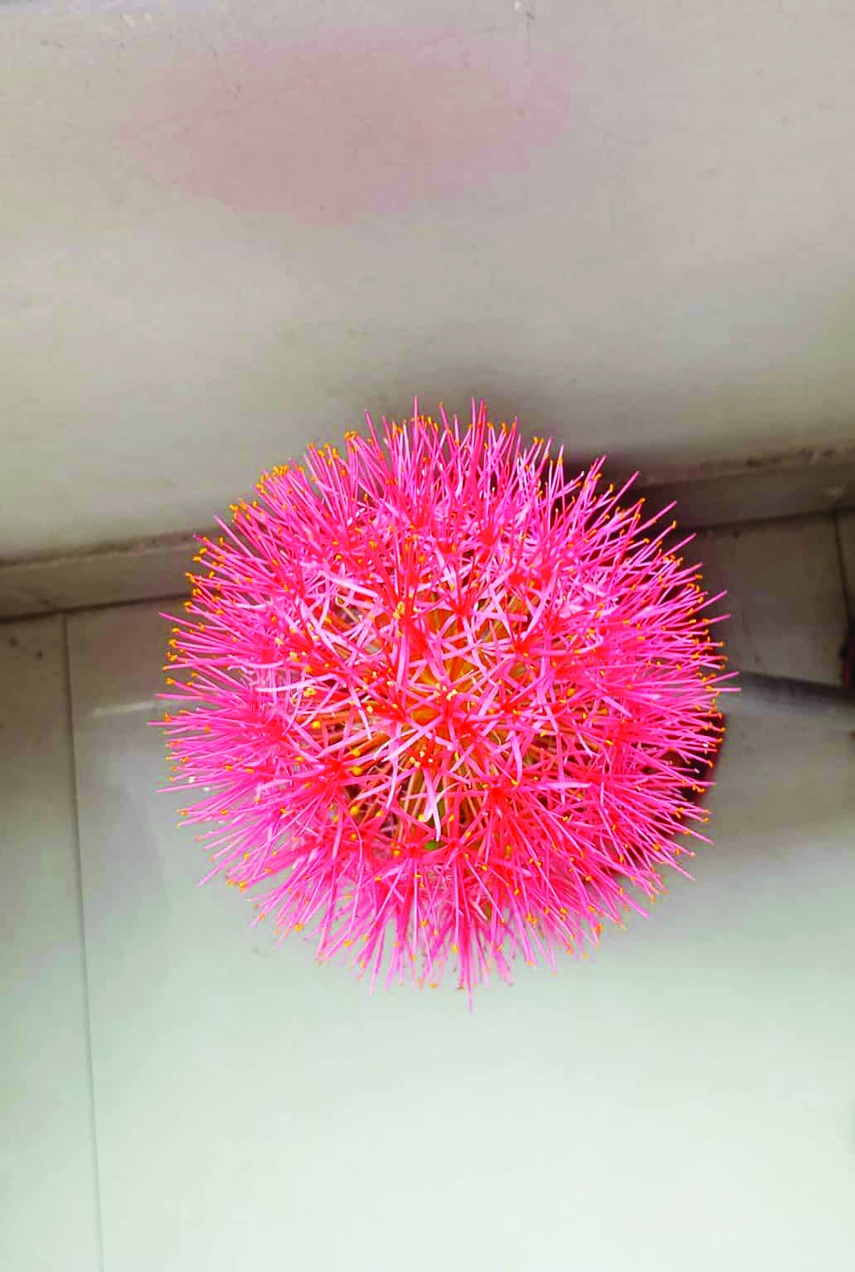
A crimson Mayflower bloomed on the balcony of housewife Farzana Yeasmin Suborna’s apartment in the capital’s New Bailey Road. - AA
Rifat Rafique Badhan
May Flower is also known as Hemanthus Lily or Fire Ball. Trees and flowers do not exist almost all year round. The tuber sleeping under the ground wakes up when there is a couple of showers in spring. The bright round flower blooms. But it is leafless. The round May Flower, like a ball at the top of a long stem, is red in color which is very similar to a step. After the May Flower blooms, the leaves slowly grow out of the ground. Due to the beauty of the tree and flowers, this tree is cultivated in large quantities in different countries around the world.
The shape of the flowers, leaves and tree is quite aesthetic. The head is spreading, round, like a large umbrella. In the beginning of May, the tree is filled with small clusters of pink flowers. There is only one flower per tree. Although the flower does not last long, the root of the tree is annual. The flower is native to Africa. Its English name is fire-ball lily, powder-puff lily, African blood lily, Catherine wheel, poison root and football lily and its scientific name is Scadoxus multiflorus. The flower is not seen for eleven months before and after May. The base remains as a plant. But it gets a new life in April. It takes on the shape of a full-grown plant.
And by the end of April, the flowers start blooming. In May, the flowers take on their full form. Its attractive shape and beauty easily distinguish it from other flowers. We have learned from eminent botanist Dwijen Sharma that it is also called ball lily because of its round appearance. For the same reason, it is called globe lily. Powder puff lily is also known as African blood lily. The May flower plant grows up to 10 meters tall. The flowers are about 3 cm. wide. Petals and stamens are uneven. When it rains in early April, the soil swells and a thick green stem or tip with buds emerges.
The tip is about a foot long. Some flowers win our hearts by spreading fragrance. Some flowers increase the beauty of nature without spreading fragrance. In the heat of this May month, along with Krishnachudra and Radhachudra, a similar odorless flower brings relief to our eyes and undoubtedly catches the eye, which is called 'May Flower'. This red and yellow colored round flower is wonderfully beautiful. May Flower blooms in May and falls in May. The original habitat of May Flower is in North America. Locally, this flower is called Epigaea Repens. When European pilgrims arrived in America in 1620 on a ship called the 'Mayflower', this flower, which was the first to bloom in spring after a harsh winter, gave them new hope and inspiration to live. As a monument to history and culture, the flower was recognized as the state flower of the American state of Massachusetts in 1918.
There are various folk tales and symbolic meanings about the Mayflower. The name and history of the flower are intertwined with the folk tales of different regions. In North America, it is a symbol of a new journey after the end of bad times, and the flower also has a special importance as a symbol of the month of May in the calendar around the world. However, in addition to these, the 'Lily of the Valley', which is common in Europe, is also considered one of the main symbolic flowers of the month of May.
As the relentless summer heat waves of Baishakh and Jayishtha sweep across the subcontinent, turning the afternoons into a shimmering haze, nature deploys its own visual antidotes. While the majestic canopies of the Krishnachudra (Gulmohar) and Radhachudra (Yellow Flame Tree) paint the urban skylines in fiery hues, a quieter, grounded miracle is unfolding in home gardens and traditional courtyards. It is the May Flower—colloquially known across Indian nurseries as the Football Lily or Fireball Lily—rearing its brilliant red head to offer instant psychological relief from the punishing summer sun. The Subterranean Sleeper Wakes up Scientifically classified as Scadoxus multiflorus, this striking African native has seamlessly integrated into the subcontinent’s seasonal lore. For nearly eleven months of the year, the plant completely vanishes from sight. Its underground bulb enters a state of deep hibernation, surviving the chill of winter and the dry spells of early spring. However, the moment the first pre-monsoon showers touch the parched earth in April, the soil begins to swell. Almost overnight, a thick, fleshy green shoot rises roughly a foot high. The structural aesthetic of the flower is nothing short of a botanical marvel: The Unique Bloom Sequence: The flower bursts forth in absolute isolation—completely leafless. The Crimson Umbel: Hundreds of tiny, star-like red florets with golden-tipped stamens radiate from a central point, creating a perfectly geometric, look-alike sphere that resembles a bright red umbrella or a soft powder-puff. The Foliage Follow-up: Only after the crimson ball completes its brief, glorious life span do the glossy, wavy green leaves slowly unfurl from the base, transforming the spot into a lush green plant for the rest of the monsoon. The legendary botanist Dwijen Sharma often highlighted that its perfectly round, globe-like appearance naturally earned it the moniker of "Ball Lily." While the individual bloom stays fresh for just a week or two, the underlying perennial root remains anchored for years, faithfully keeping its annual appointment with the month of May. A Global Tale of Two Mayflowers Interestingly, the term "Mayflower" carries vastly different cultural connotations depending on geography. In India and parts of Southeast Asia, it evokes the image of this fiery, odorless tropical bulb. However, in western history, the name belongs to an entirely different botanical family. The North American Mayflower is a delicate, sweet-scented wildflower deeply intertwined with global history. When the European pilgrims crossed the Atlantic aboard the historic ship Mayflower in 1620, this tiny pink-and-white blossom was the very first sign of life they encountered after a devastating winter on foreign shores. It became a powerful symbol of survival and resilience, eventually being declared the official state flower of Massachusetts in 1918. A Masterclass in Resilience Whether it is the fragrant white petals of the West signaling the retreat of a harsh frost, or our own fiery Football Lily offering visual cool to eyes strained by the heat, the May Flower remains a universal ambassador of fresh beginnings. Without spreading any fragrance, the Ball Lily wins hearts through sheer geometric poetry. It arrives on the dot, stages a spectacular visual performance, and recedes quietly into the soil—leaving behind a profound reminder of nature's timeless, cyclical rhythm.
Rifat Rafique Badhan is a
freelancer and a columnist.