Published: 12:32 AM, 03 June 2026
Integrity and Transparent Statecraft Can’t Be Imagined Without Free Press
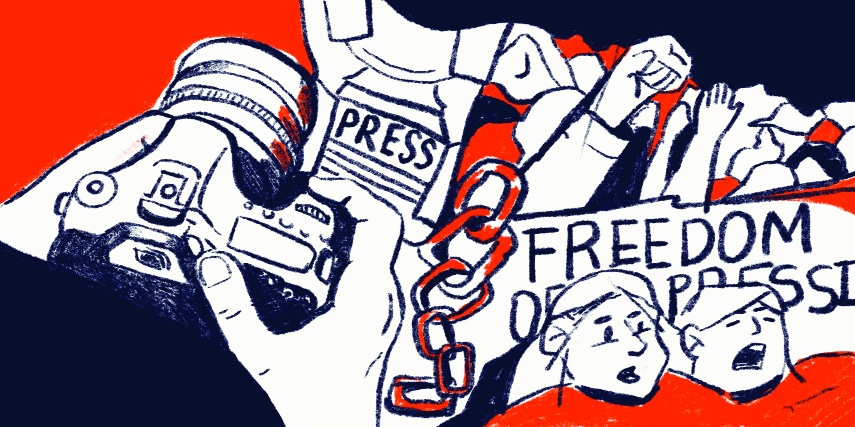
Journalist Jamal Khashoggi walked into the Saudi consulate in Istanbul in 2018 and never walked out. His murder sent a chilling message to journalists worldwide: the pen can cost you your life. His story is not an outlier. It is a symptom of a global crisis threatening one of the most fundamental pillars of democratic society — press freedom.
Press freedom is the right of journalists and media organizations to gather, report, and disseminate information without government interference, censorship, or fear of retribution. It is not merely a professional privilege for reporters; it is a civic right that belongs to every citizen who depends on truthful information to make decisions, hold leaders accountable, and participate meaningfully in public life.
A free press functions as the fourth estate — an independent watchdog on power. Without it, corruption thrives in the dark. Governments abuse authority unchallenged. Public health crises go unreported. Election fraud goes unexamined. History has demonstrated repeatedly that societies with restricted press access are societies where ordinary people suffer most, because those in power face no scrutiny and feel no accountability.
Consider the role of investigative journalism in exposing the Watergate scandal, the Abu Gharaib prisoner abuses, or the Panama Papers — a global investigation that unraveled offshore financial corruption spanning dozens of countries and heads of state. None of these revelations would have been possible without journalists who were free to investigate, free to publish, and legally protected when they did so.
Press freedom also serves as a reliable indicator of a society's overall health. Countries that rank highly on press freedom indices — such as Norway, Denmark, and Finland — consistently score well on measures of transparency, governance quality, and human rights. The correlation is not coincidental. Open information environments create open societies.
Despite its importance, press freedom is shrinking. According to Reporters Without Borders, more than two-thirds of the world's population lives in countries where press freedom is significantly restricted. In 2023 alone, over 500 journalists were imprisoned globally, and dozens were killed in direct connection with their work.
The threats take many forms. Authoritarian governments jail reporters on fabricated charges. Oligarchs buy media companies to suppress inconvenient coverage. State-sponsored disinformation campaigns blur the line between fact and propaganda, eroding public trust in legitimate journalism. Even in established democracies, journalists face harassment, legal intimidation through strategic lawsuits, and the economic collapse of local newsrooms that once served as community watchdogs.
Digital surveillance has introduced a newer, more insidious threat. Spyware tools like Pegasus have been used to monitor journalists' communications, exposing sources and enabling persecution before a single story is published.
The chilling effect — where self-censorship replaces open reporting — may be the most dangerous consequence of all. When a journalist hesitates to make a phone call or follow a lead out of fear, the public never learns what might have been uncovered.
Defending press freedom is not a passive endeavor. It requires concrete, sustained action at every level.
Governments must repeal laws that criminalize legitimate journalism, protect whistleblowers, and ensure that public records are genuinely accessible. Legal systems must provide journalists with meaningful protections against frivolous lawsuits designed to drain resources and silence reporting.
Media organizations must invest in security training, digital protection tools, and legal support for journalists in the field. Editorial independence must be structurally protected from ownership influence or advertiser pressure.
Citizens bear responsibility too. Supporting independent journalism — financially and through civic engagement — strengthens the ecosystem that press freedom depends on. Critically evaluating sources, recognizing propaganda, and demanding transparency from public institutions all reinforce the culture in which a free press can function.
International bodies and civil society organizations must maintain pressure on governments that imprison or threaten journalists, ensuring that attacks on the press carry diplomatic and economic consequences.
Every time a journalist is silenced — whether through a prison cell, a bullet, or a lawsuit — the public loses access to a truth it may never know it was missing. Press freedom is not the concern of reporters alone. It is the concern of anyone who believes that power should be questioned, that facts should be defended and that democracy requires more than the performance of elections.
The free press is not the enemy of the people. It is, in many ways, the last line between them and those who would rather govern in the dark.
Mahfuz Ul Hasib Chowdhury
is a contributor to different
English newspapers
and magazines.