
Published: 12:33 AM, 04 June 2026
A Diplomatic Triumph vs. National Reality: Assessing Bangladesh's UNGA Presidency
Bernard Priyam
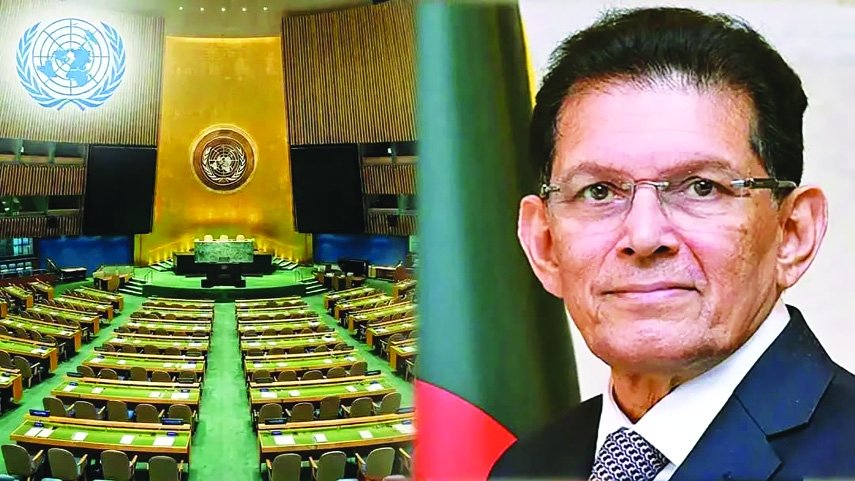
The election of Bangladesh's Foreign Minister, Dr. Khalilur Rahman, as the President of the United Nations General Assembly (UNGA) represents a significant diplomatic milestone. As only the second Bangladeshi national to assume this high-profile multilateral office, this achievement enhances the nation's standing within the global governance framework. Notably, it materializes a strategic diplomatic initiative initially institutionalized by the Ministry of Foreign Affairs in 2020.
This ascension builds upon historical precedent. In 1986, Ambassador Humayun Rashid Choudhury was elected to preside over the 41st session of the UNGA-a milestone achieved under the Ershad administration within a centralized presidential system.
Three key factors secured this historic milestone for Bangladesh: Prime Minister Tarique Rahman's decisive leadership, a swift diplomatic blitz, and the stellar credentials of the candidate, Foreign Minister Dr. Khalilur Rahman.
While Bangladesh declared its UNGA Presidency bid in 2020, the campaign shifted into high gear with Dr. Rahman's nomination on February 27, 2026. Despite a tight window, Dhaka successfully rallied global backing through strategic high-level engagements and multilateral diplomacy.
Within the United Nations architecture, public visibility and institutional prestige are primarily concentrated in three offices:
The Secretary-General
The President of the Security Council
The President of the General Assembly
From a structural standpoint, the UNGA President possesses no executive mandate to enforce resolutions or dictate sovereign state policies, nor do they hold veto power or the sweeping administrative jurisdiction vested in the Secretary-General. Furthermore, the tenure is strictly limited to a single, one-year term.
Multilateral experts note that the office commands substantial soft power and convening authority. The President steers the legislative agenda of the General Assembly, acts as a critical mediator in consensus-building among deeply polarized member states, and drives multilateral focus toward systemic challenges-ranging from climate change and global peacekeeping to sustainable development and the structural vulnerabilities of Least Developed Countries (LDCs).
The Domestic Paradox: Geopolitical Prestige vs. National Socioeconomic Hardship
As Dr. Khalilur Rahman assumes the leadership of the 81st UNGA session, the domestic constituency faces a persistent dilemma regarding the practical domestic dividends of international accolades. For citizens navigating a transitional economy, institutional stability and economic security remain paramount.
The core challenge rests on whether this elevated global platform can be leveraged to address deep-seated domestic priorities:
For a public experiencing structural economic adjustment, the metrics of successful statecraft are measured by domestic institutional resilience rather than symbolic multilateral triumphs.
The current administration inherits severe fiscal headwinds. Inflated capital expenditures from legacy infrastructure projects have strained public finances, with the national budget requiring an estimated 3 lakh crore Taka solely for debt-servicing obligations. This domestic fiscal pressure coincides with delicate geopolitical dynamics, particularly in balancing trade and diplomatic engagements between the United States and China
A critical question for policy analysts is whether the presidency can be utilized to strengthen international legal cooperation for asset recovery, or to subtly recalibrate complex trade relationships. Absent these tangible outcomes, the appointment risks being viewed domestically as a prestigious but purely ceremonial milestone.
Bangladesh approaches this UNGA tenure with cautious optimism. As Foreign Minister within the Dr. Yunus-led interim government, Dr. Rahman's presence on the world stage offers a strategic window to re-engage the international community on the prolonged Rohingya refugee crisis, seeking to operationalize prior UN commitments toward safe and sustainable repatriation to Myanmar.
However, realistic statecraft demands an acknowledgment of current global constraints. In an era marked by shifting US foreign policy under the Trump administration and rising minilateralism, the traditional authority of the United Nations faces structural friction. Concurrently, domestic observers continue to emphasize the necessity of absolute institutional integrity and alignment within the interim administration itself.
Ultimately, the overarching national interest remains clear: the preservation of Bangladesh's constitutional sovereignty, the safeguarding of its strategic autonomy against external influence, and the advancement of domestic institutional stability.
Bernard Priyam works at
The Asian Age


