
Published: 12:09 AM, 11 October 2026
Bangladesh Loses Foothold in RMG Exports to USA, Figures Suggest
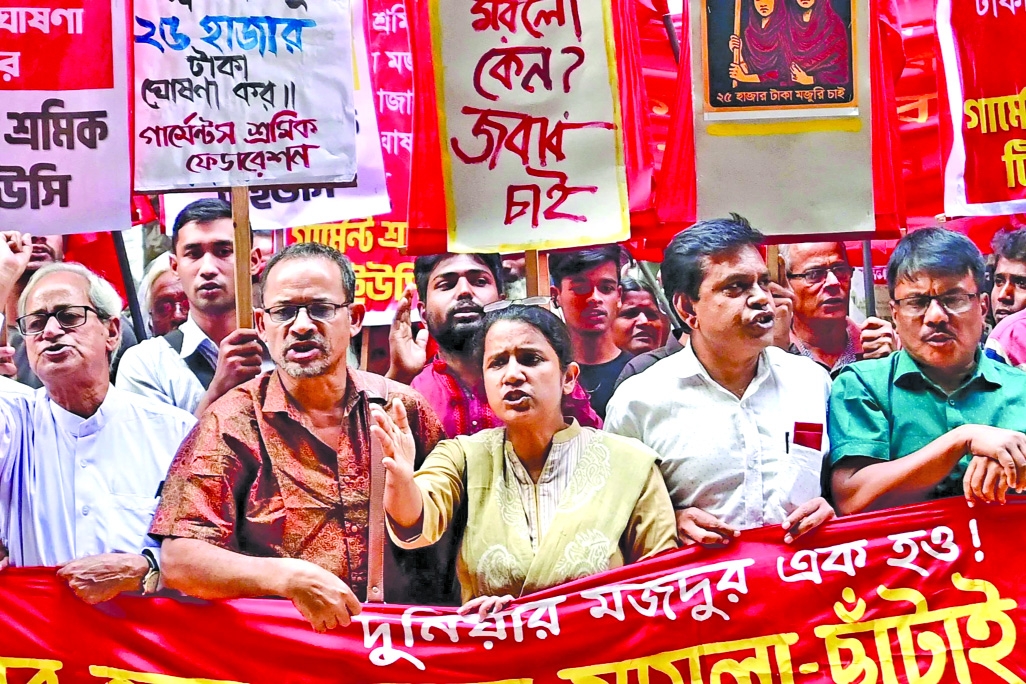
A recent picture shows readymade garments (RMG) workers demonstrating in Dhaka city against irregular salary payments and other forms of disorder at their factories. -Getty Images
Bangladesh's readymade garments (RMG) industry is facing renewed uncertainty after losing its second-place position among apparel exporters to the United States, raising concerns about the country's export competitiveness, employment prospects, and long-term economic development. The latest trade figures indicate that China has moved ahead of Bangladesh, while Vietnam continues to dominate the American apparel market.
The development comes at a challenging time for Bangladesh, whose economy depends heavily on garment exports for foreign exchange earnings, industrial employment, and economic growth. The United States is one of the country's most important apparel markets, making any sustained decline in shipments particularly concerning for manufacturers, workers, and policymakers.
According to data reported from the U.S. Department of Commerce's Office of Textiles and Apparel, Bangladesh exported approximately $5.39 billion worth of apparel to the American market during January-August 2026, down 4.43 percent from the same period a year earlier. China's exports reached approximately $5.63 billion, allowing it to overtake Bangladesh for second place. Vietnam retained the leading position, with shipments worth nearly $10.98 billion during the same eight-month period
The figures highlight a changing competitive landscape. Vietnam has established itself as a major supplier through substantial manufacturing capacity, investment, efficient logistics, and strong connections with international buyers. China, despite experiencing a significant decline in its American apparel shipments, has regained the advantage over Bangladesh in the latest cumulative ranking.
Bangladesh's loss of second place does not necessarily indicate a permanent decline in its global competitiveness. Nevertheless, falling export earnings in a major destination should serve as a warning that the country cannot rely indefinitely on its traditional advantages of relatively low labor costs and established manufacturing capacity.
The difficulties confronting the industry extend beyond international rankings. Over the past two and a half years, Bangladesh has experienced factory closures, production disruptions, financial pressures, and employment losses across several industrial sectors, including garments. Reports have documented hundreds of factory closures and substantial job losses, particularly following political unrest, financing difficulties, and declining business confidence. Claims that more than two million workers have lost their jobs, however, require further verification and should not be treated as an established figure without comprehensive employment data.
For garment workers, the consequences of factory closures can be devastating. Many depend on regular wages to support their families, pay rent, finance education, and cover essential expenses. When factories suspend operations or reduce production, workers may struggle to find alternative employment, particularly if they lack specialized skills outside the apparel sector. The effects also spread to transport operators, suppliers, food vendors, and small businesses serving industrial communities.
Bangladesh's competitive position is further complicated by changing trade policies, production costs, and international purchasing patterns. American buyers increasingly evaluate suppliers according to price, delivery reliability, product quality, labor standards, and the ability to respond quickly to changing fashion trends. Any deterioration in these areas can encourage retailers to shift orders to competing countries.
Rising production expenses, energy supply constraints, financing difficulties, and delays in receiving payments can put additional pressure on local manufacturers. Smaller factories are particularly vulnerable because they often have limited access to affordable credit and fewer resources to invest in modern machinery. Meanwhile, competitors that improve productivity, diversify their products, and attract foreign investment can strengthen their position in major consumer markets.
The implications for Bangladesh's development could be substantial. The RMG industry has played a central role in transforming the economy, generating export earnings, creating employment opportunities for millions of people over time, and expanding women's participation in the formal workforce. Garment exports also support foreign exchange reserves, government revenue, and investment in other economic activities.
A prolonged decline in apparel exports to the United States would therefore threaten more than individual businesses. It could weaken foreign currency earnings, reduce employment opportunities, discourage industrial investment, and complicate the country's broader development ambitions. Lower export revenues could also increase pressure on the balance of payments at a time when Bangladesh needs investment to improve infrastructure, productivity, and economic resilience.
Industry leaders and policymakers must respond with a coordinated strategy. Improving access to finance, ensuring reliable energy supplies, modernizing ports and transportation, and reducing administrative delays would help manufacturers compete more effectively. Greater investment in worker training, workplace safety, technological innovation, and environmentally sustainable production could also strengthen Bangladesh's appeal to international brands.
Product diversification is equally important. Although basic cotton garments remain a major strength, Bangladesh has opportunities to expand into higher-value products, technical textiles, synthetic-fiber clothing, and more sophisticated fashion manufacturing. Developing these capabilities could reduce dependence on price-sensitive orders and help exporters capture a larger share of international demand.
The government must also pursue stable economic policies and constructive trade diplomacy. Predictable regulations, stronger institutional support, and improved labor relations would encourage both domestic and foreign investment. Manufacturers, meanwhile, need to focus on productivity and product quality rather than relying exclusively on low wages to maintain their competitive advantage.
Bangladesh still possesses an extensive garment manufacturing base, an experienced workforce, and established relationships with major international buyers. These strengths provide a foundation for recovery, but preserving them will require urgent action and sustained investment.
The loss of second place in the U.S. apparel market should be treated as a serious warning rather than an irreversible setback. Vietnam's continued leadership and China's renewed position ahead of Bangladesh demonstrate how quickly international rankings can change. If export performance continues to weaken, the consequences could obstruct Bangladesh's development journey, deepen employment insecurity, and undermine industrial confidence. Restoring competitiveness in the American market must therefore become a priority for the government and the garment industry alike.
National Board of Revenue (NBR) former Chairman Badiur Rahman stated that RMG exports and remittances from expatriate Bangladeshis are the only two pillars on which Bangladesh's economy stands for the most part. Current situations and economic indicators don't seem to be doing favours to these two earning sources.
Caretaker government's former adviser Dr. Hossain Zillur Rahman said that law and order situation in Bangladesh has been far worse than ever before during last few years. Ease of doing business is also starkly missing. The authorities concerned are not being able to reduce corruption and eradicate bureaucratic entanglements. Attracting foreign buyers to purchase Bangladeshi goods under these circumstances would be highly difficult, he further said.
Dr. Nazneen Ahmed, Executive Director of Center for Policy Dialogue (CPD), said that hectic diplomatic efforts as well as strong measures to improve the investment climate should be immediately carried out to convince foreign entrepreneurs to buy RMG products and other goods from Bangladesh.


