
Published: 12:01 AM, 21 November 2026
Palkir Gaan: The Fading Melodies of Noakhali’s Folk Heritage
M. Pana Ullah
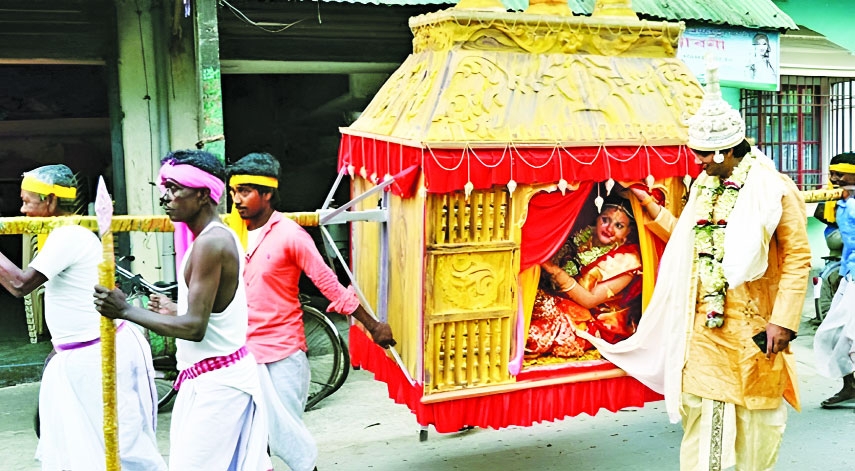
Once a symbol of aristocratic elegance and an indispensable means of rural transportation, the palanquin or ‘palki’, occupies a special place in the cultural memory of Bengal. Although modern vehicles have pushed it into oblivion, its rhythmic movements, colourful decorations and accompanying folk songs continue to evoke memories of a bygone era.
In greater Noakhali, the palanquin was not merely a mode of transport; it was an integral part of weddings, social ceremonies and the region's vibrant folk culture.
Historically, the palanquin was used primarily by wealthy and aristocratic families for travelling from one place to another. Hindu mythology also associates such vehicles with the transportation of deities and religious idols. Over time, however, the palanquin became popular across the Indian subcontinent, particularly for carrying brides and grooms during wedding ceremonies.
Known as ‘chaturdola’ in Bengali, the palanquin was traditionally constructed from wood, with iron used for additional strength. It was carried by two, four or sometimes six bearers, locally known as ‘beharas’. Its English equivalent is commonly called a palanquin, while similar traditional carriers have existed in different forms across Asia.
The word ‘palki’ is generally associated with the South Asian linguistic tradition of ‘palanka’, referring to a bed or cot.
Until the late 1970s, palanquins remained familiar sights in several parts of greater Noakhali, including Devipur in Noakhali Sadar, Chaparashirhat and Narsinghpur in Kabirhat, as well as areas of Feni and Lakshmipur. They were particularly important during weddings and other social celebrations.
The bearers were central to the palanquin tradition. Carrying a bride along village roads to her new home was physically demanding, often requiring journeys of several miles. To overcome fatigue and maintain rhythm, the ‘beharas’ sang folk songs, sometimes accompanying their performances with dancing.
These songs gradually developed into a distinctive musical tradition. Their lyrics drew inspiration from everyday village life, romance, family relationships, marriage and separation. The bearers often divided themselves into two groups, singing alternately from the perspectives of the bride and the groom.
Their language was simple, spontaneous and remarkably rhythmic. The verses frequently celebrated the bride's beauty, her clothing and ornaments, or the groom's personality and social standing.
According to the book Noakhalir Lokoshahitya, the songs were characterised by their accessible vocabulary, natural expressions and captivating rhythms. Their spontaneous composition gave them an unmistakable folk character.
The arrival of a palanquin would attract villagers of all ages. Men, women and children gathered along the village roads to watch the procession and listen to the bearers' melodious performances.
Palanquin songs captured almost every emotional dimension of rural Bengali life. Some celebrated the excitement of marriage, while others expressed the sadness of a daughter leaving her parents' home.
One traditional song, for instance, captures the anticipation surrounding a bride's journey:
“Aree tol bhai-o tol-re,
Palkite bou tol,
Ohe amra achi bou ma-go,
Shoyamir parer desher-e.”
The songs also reflected the ordinary realities of village households, describing granaries filled with rice, ponds full of fish and cowsheds occupied by cattle. Humour, playful exchanges and requests for ‘bakhshish’ (tips) were also common features of the performances.
The wedding ritual of applying henna found expression in another song: “Chhilo mendi Hindustane,
Aylo mondi Pakistane, Ei mondi tulibo ke?”
Beyond celebration, however, the most poignant theme was the pain of separation. In Bengali society, a daughter's departure after marriage traditionally represented an emotional turning point for her parents.
One song expresses the regret of parents who wish they could have held their daughter closer had they known she would eventually leave:
“Age jodi jaintam bali,
Pore nibo tore re,
Hater kam falay rakhi,
Kole nitam tore re.”
The bride, too, experienced longing for her parental home. Her hopes of receiving a visit or returning for ‘naiyor’ (a traditional visit to her parents after marriage) frequently appeared in these songs.
Thus, palanquin music became an archive of rural emotions, preserving the joys, anxieties and intimate relationships of ordinary people.
The cultural influence of the palanquin extended far beyond transportation and folk music. Its wooden exterior was often decorated with carvings and illustrations inspired by rural life, folklore and nature. Much like the traditional ‘nakshi kantha’, these artistic expressions reflected the imagination and aesthetic sensibilities of Bengal's countryside.
The palanquin also secured a lasting place in Bengali literature, music and cinema. One of the most celebrated literary references is Satyendranath Dutta's poem Palkir Gaan, renowned for its rhythmic language and vivid imagery. Its opening lines evoke the movement of the palanquin: “Palki chole, palki chole, Gogon tole agun jole.”
The poem's musical appeal was further popularised through a celebrated composition by Salil Chowdhury, sung by Hemanta Mukherjee.
Rabindranath Tagore also incorporated the image of a palanquin into his famous poem Birpurush, capturing a child's imaginative journey alongside his mother:
“Tumi jachche palkite ma chore,
Dorja duto ekto phak kore.”
The palanquin's enduring appeal also found expression in Bengali cinema and theatrical productions, demonstrating its importance as a cultural symbol.
Today, the palanquin has virtually disappeared from everyday life. The descendants of many traditional ‘beharas’ have moved into other professions, and the generations who once carried brides along village roads are gradually passing away. Some of their songs, however, survive through oral tradition and scattered cultural records.
The disappearance of the palanquin represents more than the replacement of an old vehicle by modern transportation. It also marks the fading of a distinctive cultural practice in which music, craftsmanship, community participation and human emotion were intricately connected.
In an age dominated by modern entertainment and digital culture, rediscovering these folk songs is an important way of reconnecting with our roots. Their simple language and powerful imagery offer valuable insights into the social history and emotional landscape of rural Bengal.
The palanquin may never return to the village roads, but its cultural legacy deserves preservation through research, documentation, publications and musical revival.
Ultimately, the palanquin was never merely a wooden carriage resting on the shoulders of four bearers. It carried the dreams of newlyweds, the tears of departing daughters, the melodies of rural poets and the collective memories of a community. Though its journey has ended, its songs continue to travel through the corridors of Bengali memory. The palanquin is gone, but the music of its journey remains.
References:
1. Palki: Jekhane Hridoy Dole Ganer Shure, Daily Prothom Alo, 16 November 2019.
2. Shilpo-Shahitya, Daily Aaj O AgamiKal, 11 November 2026.
3. M. Pana Ullah, Noakhalir Lokoshahitya, Monon Prokashon, Chattogram, 2023.
M. Pana Ullah is a poet and essayist.


