REFLECTIONS
Published: 12:43 AM, 30 November 2017 Last Update: 12:47 AM, 30 November 2017
Soft encounters with dictators
 General Pervez Musharraf
I have not very much had the pleasure of meeting many dictators. The reason of course has to do with the fact that many of these military rulers --- and I speak of the coup makers in Pakistan and Bangladesh --- dominated their countries when I was basically pursuing education from school through university. Only one, General Hussein Muhammad Ershad, had charge of the state when I was well out of university and into the journalistic profession.
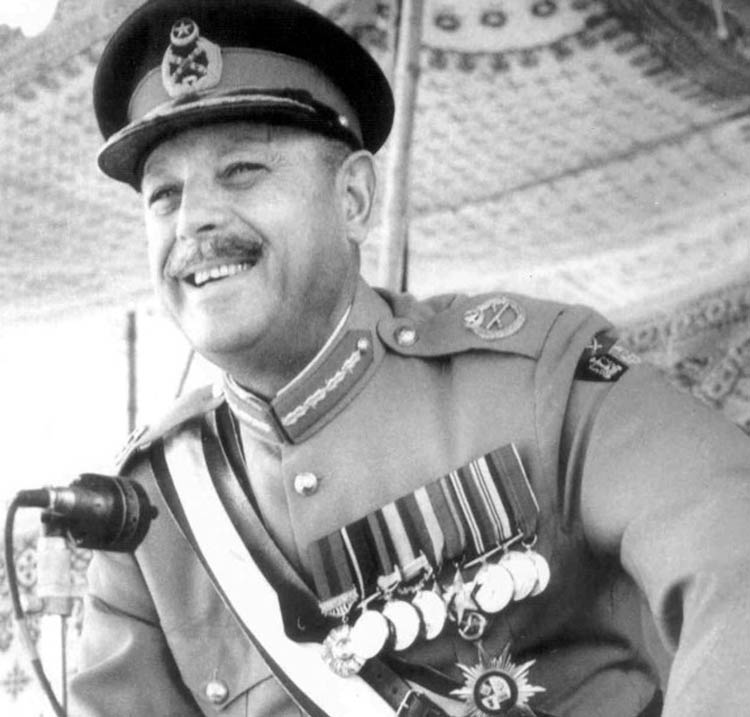
Field Marshal Mohammad Ayub Khan
But though I have not had the experience of interacting, in a serious manner, with the other members of what can truly be described as the club of coup makers, there are yet some incidents or encounters which I have not quite forgotten. You might say these are part of the canvas of anecdotes which I have treasured, which I have kept as part of my memory bank. They are part of my personal story.
The first military ruler I did get in touch with, for a brief few seconds --- it certainly was less than a minute --- was Field Marshal Mohammad Ayub Khan. I had no idea at the time, and I speak of a cold day in March 1965, that he was actually a general who had promoted himself to field marshal and thus made it look as if he was the true and sole arbiter of Pakistan's destiny.
For the little boys that we were at that midway point of the 1960s, though, he seemed to be a great man. And it was thus that this 'great man' once stopped before our school, right in front me as I stood with my schoolmates welcoming him on one of his trips to Quetta, and asked me what I wished to grow up as in future. I have said this before and I will take the liberty of saying it again. I told him I would like to be President of Pakistan. He beamed. He put his large hand on my head and ruffled my hair. It was, in hindsight, a curious case of a President meeting a would-be President. I chuckle every time I remember that cold, windswept morning.
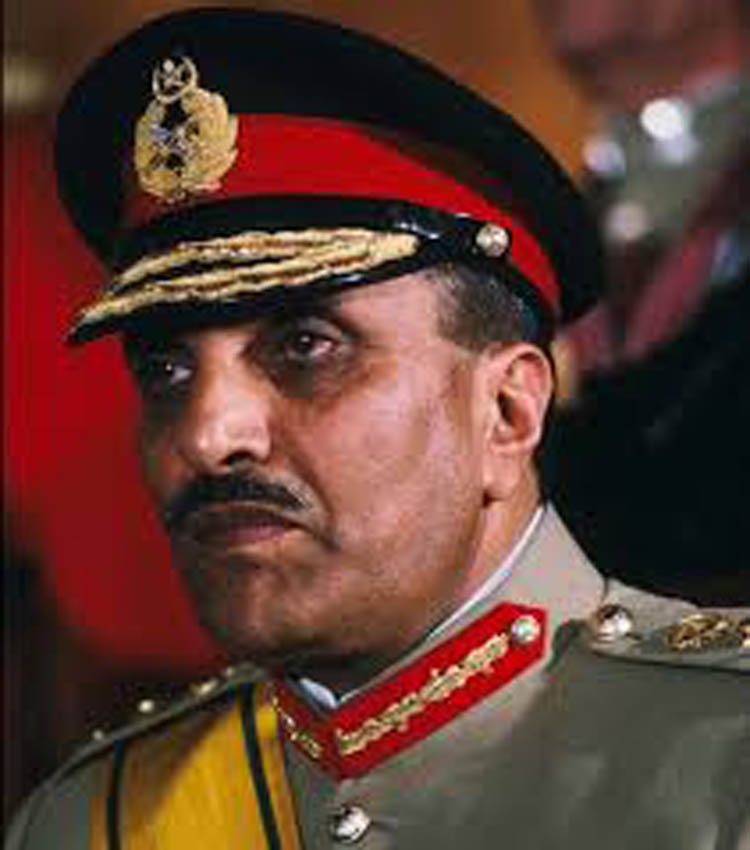
General Ziaul Haq
That was it. I did not have the opportunity of meeting General Yahya Khan. It was sore disappointment when he took over from Ayub Khan in 1969 (by that time I was a little more mature, read newspapers more avidly and had begun taking intense interest in politics) just at a point when everyone thought a solution was about to be found to Pakistan's political crisis.
But when Yahya Khan made it clear that he was taking the country on to the road to democracy, through accepting the demand for one-man one-vote and restoring the old provinces of West Pakistan by doing away with the One Unit system, I thought as did so many others that the man was truly sincere in his goals. I was happy when on a visit to Dhaka after the general election of December 1970 he referred to Bangabandhu Sheikh Mujibur Rahman as Pakistan's future Prime Minister. His subsequent actions were a blemish on his presidency.
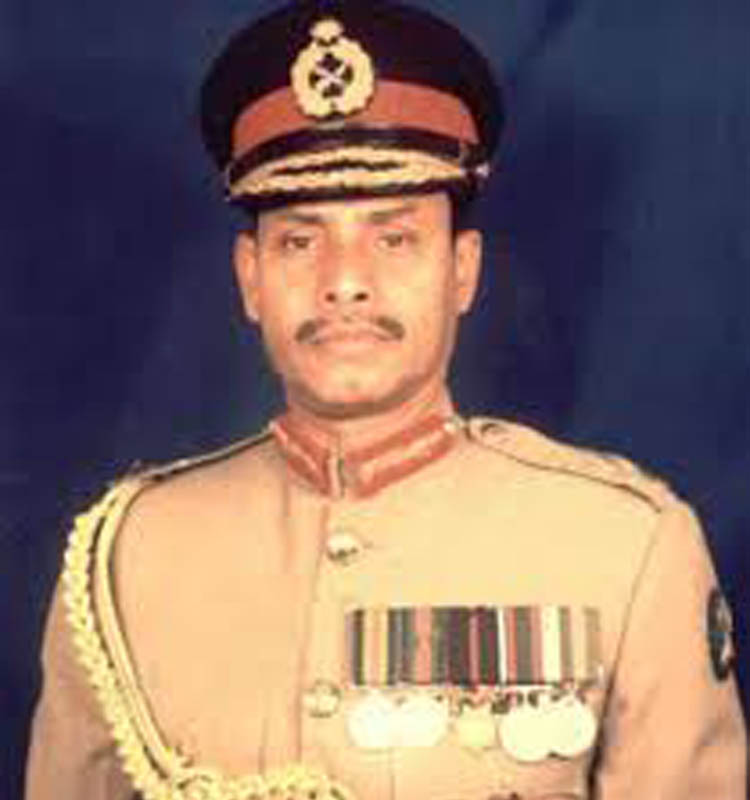
General Hussein Muhammad Ershad
In Bangladesh, I did not meet General Ziaur Rahman. The reason was plain. I was at university when he conducted his one-man show in the country. I remember I was deeply saddened when on the morning of 7 November 1975 he was placed in power by a bunch of soldiers raising slogans that were of a patently communal brand.
It was tragic knowing that General Khaled Musharraf's coup, which evicted Khondokar Moshtaq and the assassin-majors and colonels from Bangabhaban, had collapsed. Khaled Musharraf was the most brilliant tactician among our sector commanders during the 1971 war, and so millions of us looked to the day when he would restore decency in the country after the shame of the murder of the Father of the Nation and the four national leaders. Zia's rise was therefore a stab in the back for the nation.
A smooth talking dictator I had the chance to meet once was Pakistan's General Ziaul Haq when he visited Dhaka for the first SAARC summit in December 1985. I was then a young assistant editor at the New Nation. It was decided by the management of the Ittefaq and New Nation that four of us, two from each newspaper, would interview the general. He was at his most affable with us and it was hard to believe that this very man was the epitome of ruthlessness, that he was happy subjecting his country's journalists to lashes in public, that he had maneouvered the judicial murder of his benefactor Zulfikar Ali Bhutto.
With me he was particularly effusive and even went to the point of asking Pakistan's High Commissioner Tanvir Ahmed Khan to give me an invitation to visit Pakistan. When I told him I had gone to school in Pakistan, he said it was all the more reason why I should visit it again. That visit did not materialize as long as Zia was alive, but I did visit Pakistan subsequently, four times in fact, thrice for media conferences and once at the invitation of Islamabad's foreign office.
I have seen General Ershad at close quarters on only two occasions. The first was when, at some point of his rule, he was going around visiting newspaper offices in what was obviously a public relations exercise on his part. He badly needed legitimacy and this was one of his ways of coming by it. At the New Nation and Ittefaq offices, we were informed by Anwar Hossain Manju, one of the owners of the newspapers and at that particular point a minister in the Ershad regime, that the President would be visiting us.
I recall, to my surprise even today, how as we left Manju's room a number of my colleagues fumed and muttered in visible anger. They had no wish to welcome a dictator to as hallowed a place as journalism. Only hours later, however, as General Ershad stepped out of his car at Ittefaq Bhaban, some of those very indignant journalists began to push and pummel their way through their colleagues, eager to shake the military ruler's hand. Bemused, I watched, along with some others, who were equally bemused. It is a spectacle I will never forget.
My second experience of General Ershad's company was in the year 2000, when as associate editor of the Independent I went to his Baridhara residence with my editor Mahbubul Alam. Mahbub Bhai was close to Ershad and was planning interviews of political leaders, including Sheikh Hasina and Khaleda Zia, for the Independent.
The interview plans for the Awami League and BNP chiefs never worked out, but talking to General Ershad was rather refreshing. He was extremely coherent in articulating his opinions on national issues; his English was admirable and of course his Bengali was impeccable. He was the symbol of good health.
I came away impressed, but then also told myself that Ershad could have earned an enviable place in history as a benevolent ruler had he stayed clear of the executions of the thirteen military officers in the aftermath of General Ziaur Rahman's assassination and had he resisted the temptation of becoming a politician through shaping a political party.
I was part of a team of Bengali journalists visiting Islamabad in 2000 for a South Asian media conference. The concluding day of the conference featured an address by Pakistan's newest military ruler Pervez Musharraf at lunch, which the general hosted for the conference participants. When lunch was over, we from the Bangladesh team --- on our team were senior journalists such as Enayetullah Khan and Iqbal Sobhan Chowdhury --- decided to go up to him and do him the courtesy of saying hello.
He went into nostalgia when he referred to his time as an officer of the Pakistan army in East Pakistan. That made us curious, for at the back of our minds was the sordid story of Pakistan's soldiers in 1971. When was he in East Pakistan? We asked him. He quickly allayed our suspicions by letting us know that he had served in Dhaka in 1967. He was clearly wistful about that phase of his career.
And why do I recall all these men who thought nothing of seizing the state on the strength of guns? Do I need to answer that question, really? My answer is probably as good as yours. If it is not, you have little reason to worry anyway. But reflect back on these dictators, if you can, in your own moments of silence.
The writer is Associate Editor, The Asian Age
The writer is Associate Editor, The Asian Age